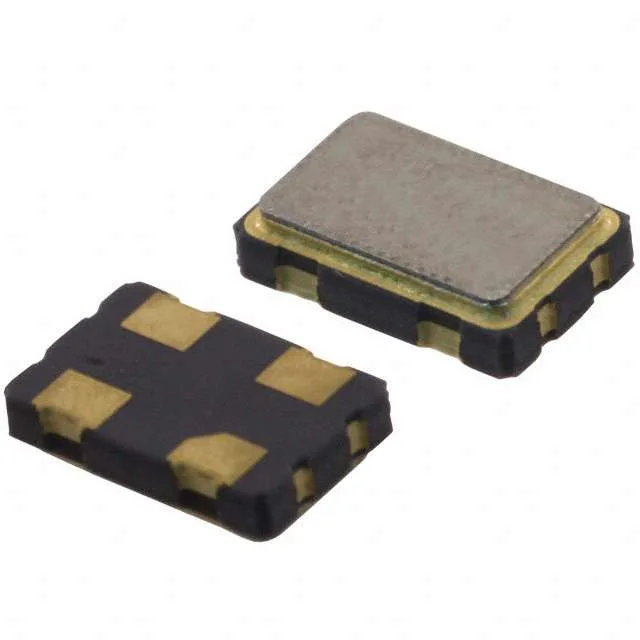
22.1184 MHz: the frequency that anchors the BOM line
The ECS-2532HS-221-3-G: The 22.1184 MHz frequency is the defining reason buyers search this code — it is the industry-standard baud-rate crystal, dividing cleanly by 16 to produce 115200 bps and other standard UART rates without clock-divider rounding error. This makes it the default clock source for microcontroller boot loaders and communication peripherals across countless embedded designs. The ±10 ppm frequency stability rating covers the entire -40°C to 85°C operating window — no temperature-compensation design work is needed to stay within UART timing budgets across that range. For any design requiring a clean, accurate UART or SPI clock at 3.3 V, this is the frequency that clears the fit question before any other spec is examined.
3.3 V rail and the enable/disable function
In a battery-backed datalogger or remote-sensor node that sleeps between transmissions, shutting down the oscillator between measurement cycles is a direct power budget win; the 10 µA disable draw sits below the self-discharge rate of most coin-cell and supercapacitor rails.
4-SMD footprint and family continuity
The base resonator is a crystal, which sets this apart from MEMS-based XO variants — the distinction matters in high-vibration or high-shock environments where crystal-based oscillators have a long-proven mechanical resilience record. The part ships on Tape & Reel and Cut Tape for both high-volume placement lines and low-volume rework use.