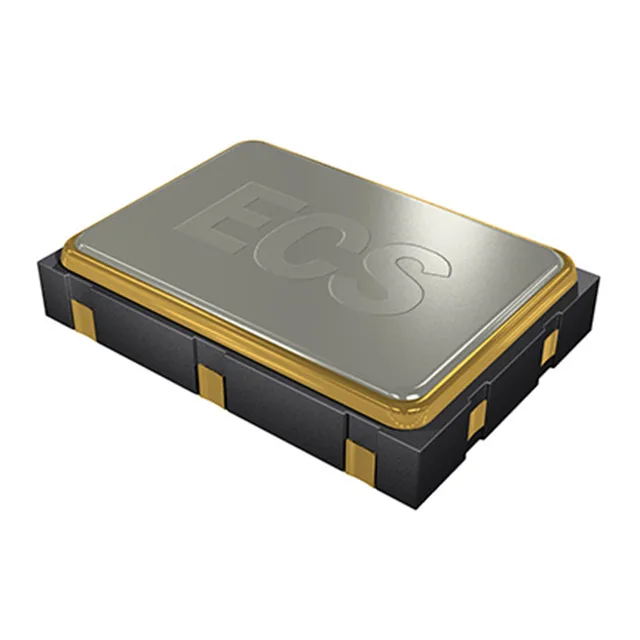
5 MHz at 3.3 V with ±10ppm stability
The ECS-2520S33-050-FN-TR is a standard crystal oscillator delivering a 5 MHz HCMOS clock at 3.3 V nominal supply — the three specs that typically decide fit in a reference-clock or timing-chain position. Frequency stability of ±10ppm over the full operating range means total frequency error stays within 5 Hz of nominal — tight enough for serial-data baud-rate references and CAN/LIN bus clocks where accumulated drift matters across temperature.
HCMOS output and the Enable/Disable control
HCMOS output swings rail-to-rail at 3.3 V, driving standard logic thresholds directly — no level-translation needed when the downstream MCU or ASIC runs on the same rail. The Enable/Disable pin lets the oscillator drop from 7 mA active draw to 10 µA maximum in shutdown — for battery-backed or intermittently-powered circuits this is the power-savings lever, not the standby spec of the downstream load.
Package and layout fit
Industrial temperature grade -40°C to 85°C covers the operating envelope for most indoor-automation control boards and field-deployed comms modules — above 85°C the frequency stability is no longer guaranteed to the ±10ppm spec.