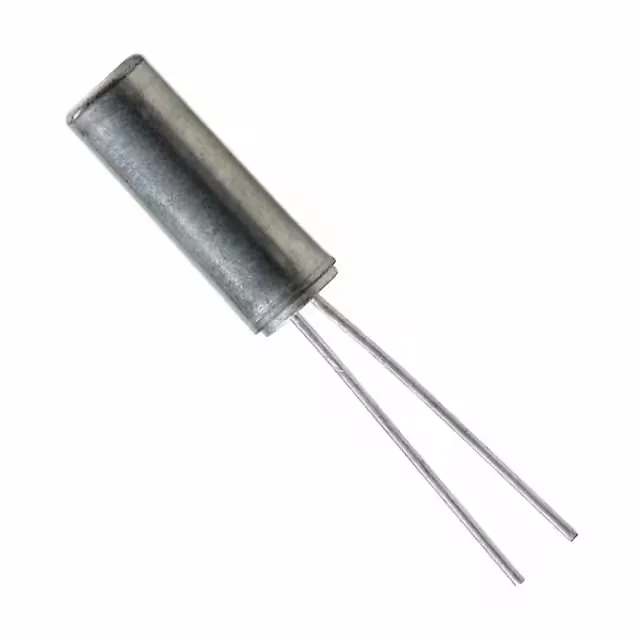
25 MHz fundamental — what the numbers mean
The ECS-250-18-9: The 25 MHz fundamental mode crystal needs an 18 pF load capacitance to hit its rated frequency — an 18 pF load crystal paired with the wrong capacitance value pulls the output off nominal, so check the MCU or oscillator IC's recommended external caps before dropping it on the board. ±50 ppm covers both initial tolerance and temperature drift across the operating range. That puts UART baud-rate error comfortably inside the ±2.5% window most 115200 bps links tolerate, and well within the tolerance budget for SPI and I2C clock references in non-telecom embedded applications.
The temperature limit that gates the application
Rated -10°C to 60°C — this is commercial-grade, not industrial. It belongs in office equipment, consumer electronics, and factory-floor devices that live in conditioned enclosures. If the board sits near a motor or outside, look for an extended-range crystal; the -10°C floor is the first filter in the parametric table.
Radial can, through-hole — swap-in fit
Cylindrical can, 3.20 mm diameter by 9.00 mm body length, through-hole radial leads. Orientation is unambiguous — the lead offset or dot marking identifies pin 1, and the radial insertion seats flush in a standard PCB hole without a hot-air station or vacuum pen. 50 Ω ESR is well within the drive-level ceiling for most MCU clock pins.