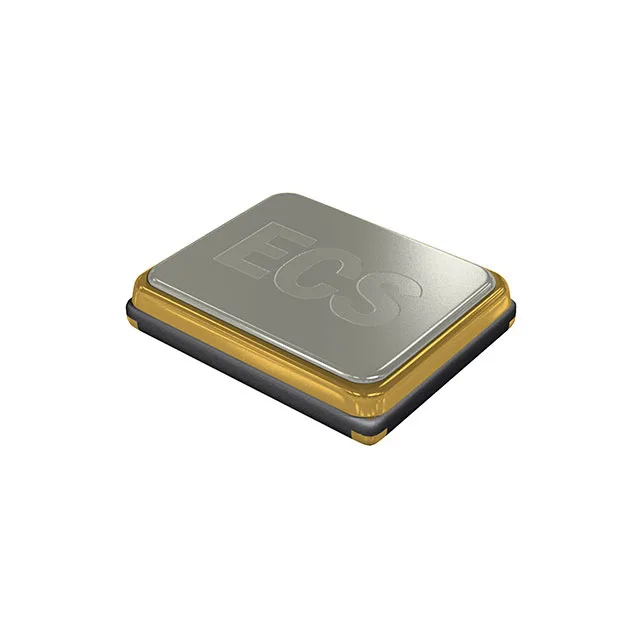
The ECS-250-10-37B2-CWN-TR: Rated 10 pF load capacitance and 50 Ω ESR — the ESR figure sets the drive-level margin for startup. A 50 Ω ESR on a 25 MHz fundamental crystal is typical for the load, but the circuit's oscillating gain must exceed the losses in the crystal and its associated bias network at cold; mismatched load capacitance is the more common cause of startup failure than ESR at rated temperature. The combined tolerance stack is ±25 ppm (±10 ppm initial tolerance plus ±15 ppm frequency stability across temperature), which is adequate for most UART, SPI-clock, and USB-phased reference applications. For a 25 MHz USB-host reference, the ppm budget matters more than the ESR — jitter contribution from a crystal off-frequency grows as the PLL multiplies the reference up to the USB bit rate.
Industrial temperature grade for embedded and instrumentation duty
Rated -40°C to 85°C operating range — the industrial grade covers outdoor enclosures and motor-adjacent deployments without active cooling, though the frequency stability is only guaranteed over that band; the user must consult the stability-vs-temperature curve if the application gates a ±50 ppm budget at the extremes.