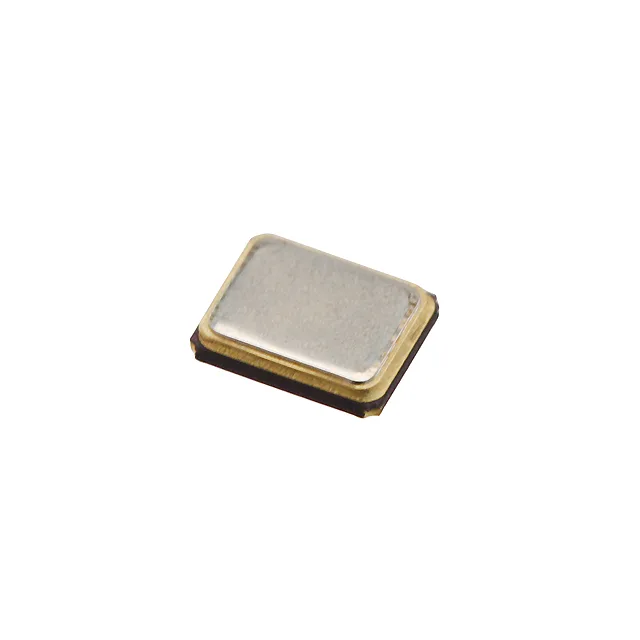
25 MHz automotive clock reference
The ECS-250-10-36Q-AES-TR is a 25 MHz fundamental-mode crystal in the ECX-2236Q series, specified with a 10 pF load capacitance and an ESR of 60 Ohms. At 25 MHz the ESR drives the drive-level budget — the loop gain margin in the Pierce oscillator depends on the crystal's motional impedance at that frequency, so the 60 Ω figure is the parameter that confirms startup margin in the target circuit rather than a current rating. Frequency stability of ±50 ppm and tolerance of ±25 ppm combine to give a ±75 ppm total frequency error budget — acceptable for CAN/CAN-FD bit timing and automotive sensor nodes where the reference clock is the dominant timing source. If the application requires tighter accuracy than ±75 ppm total, the board-level load capacitance trimming must be verified against the 10 pF load spec.
AEC-Q200 Grade 1 for under-hood zones
The upper limit is the seated-part temperature, not the ambient; a thermally optimized layout can improve effective margin. The 125 °C rating distinguishes this from commercial-grade crystals (typically 0 to 70 °C) and positions it forADAS ECUs, powertrain controllers, and BCMs — anywhere the ECU enclosure sees elevated temperatures under load or in a parked vehicle with solar gain. The full AEC-Q200 qualification suite covers bias stress, temperature cycling, and mechanical vibration per the automotive test plan.
2.50 × 2.00 mm footprint for dense automotive PCBs
The no-lead construction reduces parasitic inductance compared to a Gull-wing package, which helps the Pierce oscillator maintain stable startup at 25 MHz. Supplied on tape-and-reel with cut-tape option — the reeled format suits high-volume SMT placement on automotive production lines where consistent feed to the nozzle matters for placement accuracy on this small pad geometry. Verify the paste stencil aperture and solder paste volume for the no-lead pads before committing to a new layout — the pad-to-mask ratio for this package type is sensitive to the reflow profile.