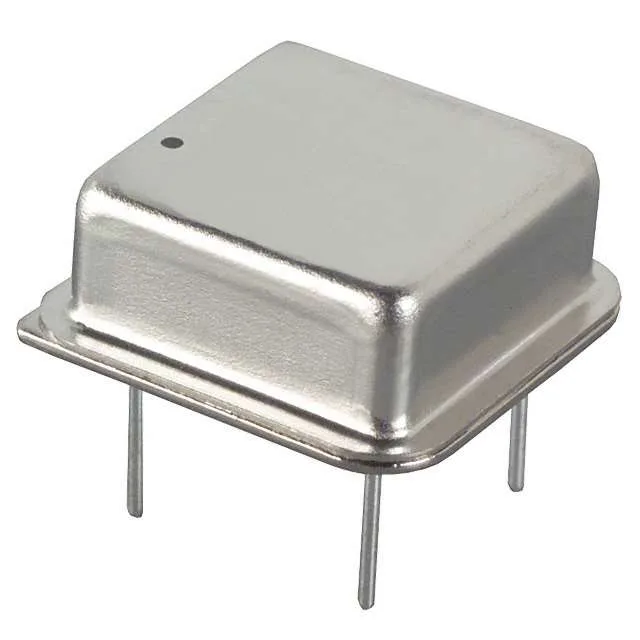
4 MHz TTL/HCMOS oscillator — what the ratings decide
The ECS-2200B-040 is a standard XO (crystal-based) oscillator in the 8-DIP half-size metal can, driving a 4 MHz output in both HCMOS and TTL logic levels from a single 5V rail. Peak supply current is 25 mA, so the local 5V supply rail and any downstream clock inputs must budget for that draw when the output is active. Frequency stability is ±50ppm at 0°C to 70°C. For a 4 MHz clock that is a worst-case drift of ±200 Hz across the full commercial temperature range — tight enough for UART timing (1.5% error at 115200 baud is within the UART tolerance window) but worth validating against any PLL reference or motor-control duty-cycle budget where the clock error multiplies through a divider.
8-DIP footprint and supply rails for board integration
The package is 13.20 mm × 13.20 mm with a maximum seated height of 5.40 mm. Four leads on 2.54 mm pitch drop into a standard through-hole DIP footprint — the metal can body sits above the board, so the enclosure must clear that height plus any socket overhang. Bulk packaging means no tape-and-reel; the part ships as loose pieces in a tube or tray. The Enable/Disable pin is the fourth pin on the package — confirm the pinout against the board schematic before populating, since mixed sourcing or a datasheet revision can shift pin assignments on legacy DIP oscillators. The 5V supply should be decoupled close to the package with a 100 nF ceramic cap on the supply pins to dampen the current spikes the HCMOS output switches draw.
ECS Inc. lists this part as Active. Confirm any environmental or regulatory requirements with ECS Inc. directly before committing to a new design.