What the clamp voltage and standoff actually mean for your rail
The 1.5KE520A-G: It is designed to clamp voltage spikes, not to regulate a DC rail. The 444.6 V reverse standoff (working voltage) means the diode is effectively open below that level; the leakage current stays negligible in normal operation. When a transient exceeds 494 V (minimum breakdown), the device enters avalanche and clamps at 717.6 V maximum, shunting the surge current through the junction. This is a single-pulse rating — repetitive surge events require derating per the manufacturer's pulse derating curve.
Package and board integration
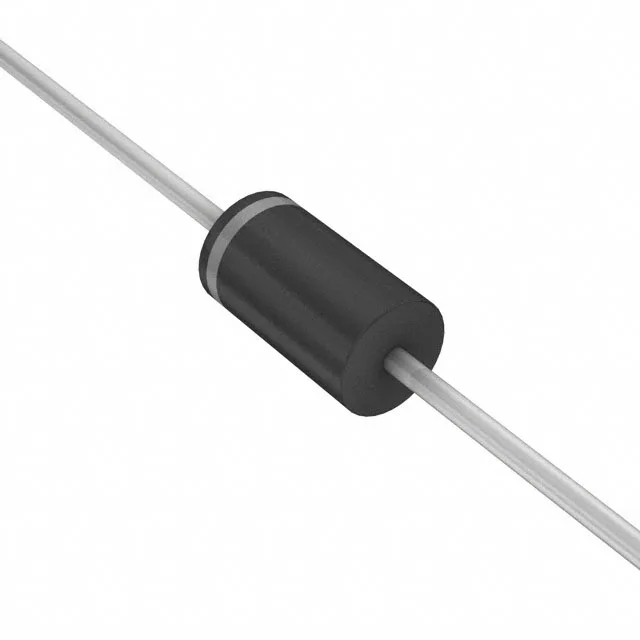
Housed in a DO-201AA (DO-27) axial-lead package with a DO-201 supplier device designation. Through-hole mounting with 0.96 mm (0.038 inch) lead diameter — fits standard 1.0 mm PCB holes. The axial body is 7.6 mm long; lead spacing is non-critical for hand or wave solder. The junction operates across -55°C to 150°C, covering industrial and some military temperature envelopes.
Signal line protection, not mains
The 1.5KE520A-G carries no power line protection rating — it is intended for general-purpose transient suppression on signal, data, or DC bus lines where the working voltage is 444.6 V or below. The single unidirectional channel protects one polarity rail; a bidirectional pair or bridge arrangement is needed for AC-coupled lines.
Comchip Technology lists the 1.5KE520A-G as Active.