What the 1500W rating means on a repair bench
The 1.5KE500A-G: At 690V clamping voltage, the peak pulse current is 2.17A, which tells you the surge it can handle: a 480V line transient that lasts a millisecond or less gets shunted to ground before it reaches the downstream silicon. The reverse standoff voltage is 427.5V, meaning the diode stays high-impedance below that level and only starts conducting when the transient exceeds it. For a 400V nominal rail, this gives about 27V of headroom before the TVS begins to clamp — typical for protecting MOVs or downstream DC-DC converters in industrial power supplies.
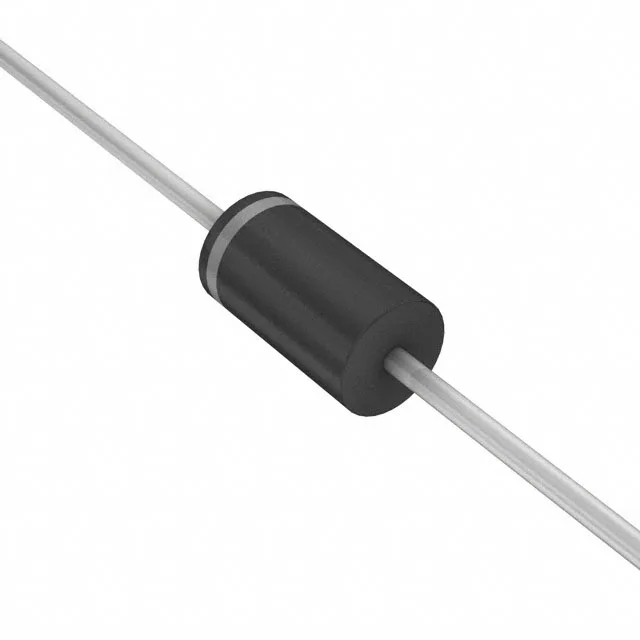
Housed in a DO-201AA / DO-27 axial leaded package, the 1.5KE500A-G is a through-hole part — the leads go through the board and are soldered on the opposite side. The DO-201 footprint is standard; the anode end is usually marked with a band. For a repair tech, this package is easy to extract and replace with a soldering iron or hot-air station, unlike surface-mount TVS arrays that need reflow.