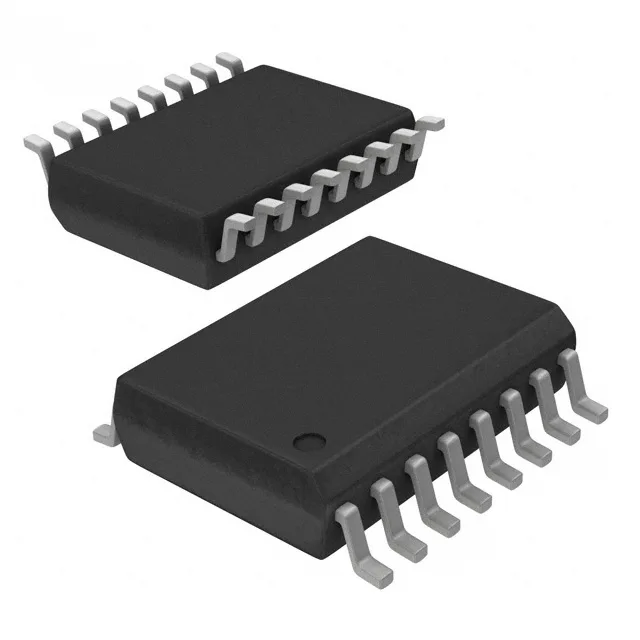
Analog Devices Inc./Maxim Integrated DS3231M+
IC RTC CLK/CALENDAR I2C 16SOIC
Full Technical Specifications
12 Parameters| Parameter / Attribute | Specification / Value |
|---|---|
| Type | Clock/Calendar |
| Mounting | Surface Mount |
| Supply voltage | 2.3V ~ 5.5V |
| Voltage - supply, battery | 2.3V ~ 5.5V |
| Current - timekeeping | 130µA ~ 200µA @ 3.63V ~ 5.5V |
| Interface | I²C, 2-Wire Serial |
| Operating temperature | -40°C ~ 85°C |
| Package | Tube |
| Features | Alarm, Leap Year, Square Wave Output |
| Date format | YY-MM-DD-dd |
| Time format | HH:MM:SS (12/24 hr) |
| Case | 16-SOIC (0.295\", 7.50mm Width) |
Need Stock or a Drop-in Second-Source for DS3231M+?
Package: SO-8 (DS1307) / SO-16 (DS3231) · Pin-compatible replacements with immediate Shenzhen spot stock
This pair is the RTC story of the hobby and light-industrial world: the DS1307, a plain I2C clock that drifts with its external crystal, and the DS3231, the same register lifestyle with an integrated TCXO that holds about a minute a year. The confusion is structural: both answer at I2C address 0x68, both run on almost the same register map, most libraries swap between them with a type change - and they are physically incompatible, an 8-pin SO-8 against a 16-pin body with the crystal inside. On modules the choice is a purchase decision; on a PCB it is a layout decision; and the classic field mistake is treating the chip-level swap as the module-level one.
Verified Pin-Compatible Replacements (3 verified alternatives)
The Accuracy Upgrade - With a Footprint Bill
Shenzhen Spot Stock (24-48h Dispatch)
Integrated TCXO and crystal: about +/-2ppm across the industrial range (roughly a minute per year) against the DS1307 external-crystal drift of tens of ppm (minutes per month).
2.3V to 5.5V - the 3.3V-friendly rail where the DS1307 wants a 5V supply.
The MEMS- resonator Member
Shenzhen Spot Stock (24-48h Dispatch)
The MEMS-resonator variant of the precision RTC: same TCXO-class accuracy target in the same 16-pin body, substituting a silicon resonator for the quartz.
Same 2.3V to 5.5V rail.
The Original - Keep It Where It Fits
Shenzhen Spot Stock (24-48h Dispatch)
The plain I2C clock with the external 32.768kHz crystal: 56 bytes of battery-backed SRAM and a square-wave output are part of its identity, and its drift (tens of ppm with a good crystal, worse with a bad layout) is a known design cost.
5V-native (4.5V to 5.5V) - the reason 3.3V retrofits move to the DS3231 family.
Buyer & Quality Checklist for Sourcing Alternatives
- Chip level: SO-8 against SO-16 - the DS1307-to-DS3231 upgrade is a respin. Module level: both ride the standard blue breakout style and swap trivially. Know which level the claim lives at before promising an "easy swap".
- Firmware level is the easy half: address 0x68 and a nearly identical register map mean most code runs after a library type change - except anything stored in the DS1307 56-byte SRAM, which the 3231 does not have.
- Accuracy arithmetic for the decision: DS1307 with a good external crystal drifts minutes per month (layout-dependent); DS3231-class parts hold roughly a minute per year. For loggers and meters, the upgrade pays immediately; for toys, it does not.
- The DS1307 external crystal is the accuracy bottleneck and a common repair fault: a no-run or fast-run clock can be the crystal, the load capacitors or the layout - check before replacing the chip.
- Backup power topology differs in practice: coin-cell backup is standard on both, but the DS3231 battery drain is far lower - designs upgrading accuracy should re-check the cell life rather than inherit the old assumption.
- For fleet repair, keep the two modules distinctly labeled: the marketplace sells both under nearly identical photographs, and the package difference is invisible until the soldering iron is hot.
Frequently Asked Technical Questions
Q: Is DS3231 a drop-in replacement for DS1307?
A: At module level and in firmware, close enough: same I2C address, nearly same registers, libraries swap with a type change. At chip level, no - SO-16 against SO-8, a board respin. The DS1307 SRAM does not exist on the DS3231.
Q: Why does my DS1307 lose minutes every month?
A: That is the design: accuracy comes from the external crystal, its load capacitors and the layout - tens of ppm at best. If the application cannot live with it, the DS3231-class parts with integrated TCXO are the standard upgrade, roughly a minute per year.
Q: Can I use DS1307 code with a DS3231?
A: Mostly: the timekeeping registers are nearly identical and the address matches, so common libraries work after switching the constructor. Code that used the DS1307 56-byte battery-backed SRAM needs a different storage plan on the newer part.