What the 36V standoff and 58.1V clamping mean on the board
The 5.0SMDJ36CA/TR7: That 22 V headroom between standoff and clamping ceiling is the absorption window — the steeper the transient and the lower the source impedance, the harder the diode clamps toward that 58.1 V limit before the downstream circuit sees damage. Rated 5000 W peak pulse power at a 10/1000 µs waveform — the classic telecom/industrial surge shape. The 86.1 A rating is the current the diode conducts at the clamping voltage during that event; a slower, higher-energy surge (8/20 µs) would conduct more current at a lower clamping voltage, so the 10/1000 µs figure is the relevant design point for the waveforms most boards encounter from switching transients and inductive kickback.
DO-214AB SMC package and thermal considerations
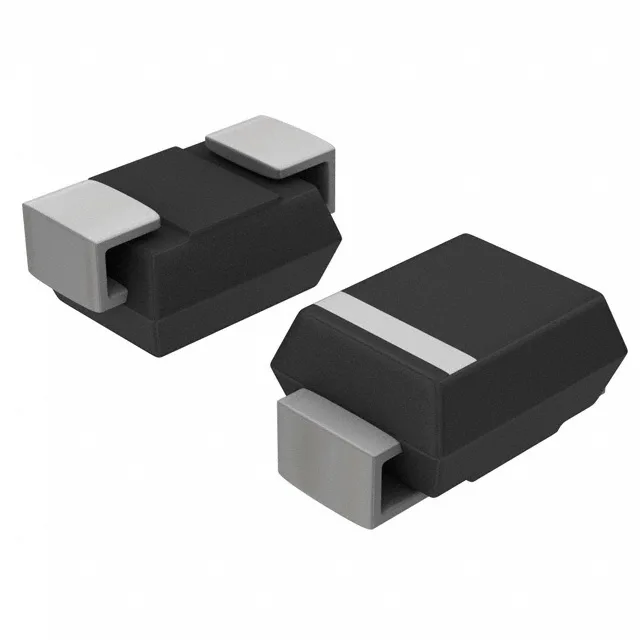
The DO-214AB (SMC) is the standard power-SMD outline for TVS diodes in this rating class — the cathode tab provides a thermal conduction path to the PCB pad, and the 150 °C maximum junction temperature means the board-level thermal design matters more than the package itself.
Where a bidirectional TVS Zener in this series fits
The 5.0SMDJ series covers general-purpose transient suppression; the bidirectional configuration (the CA suffix) means it clamps symmetrically on both polarities — suited for data lines, control rails, and any node where the transient can appear above or below ground. Power-line protection is explicitly listed as outside this part's scope.