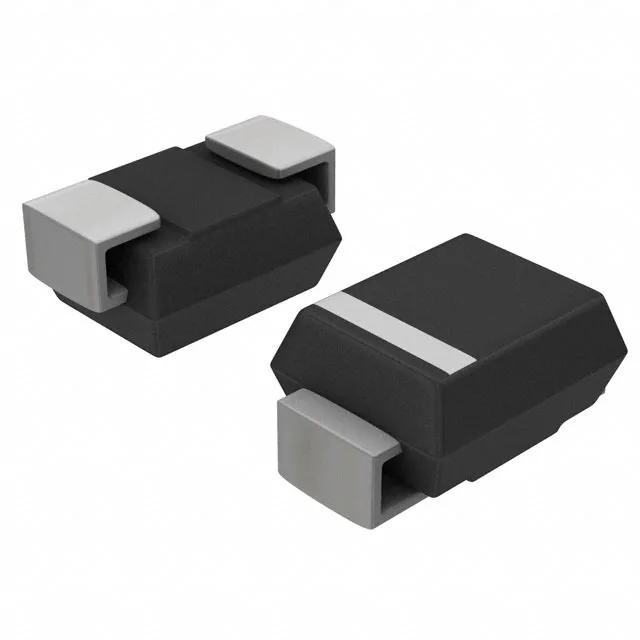
5 kW peak pulse in a standard SMC body
The 5.0SMDJ28CA/TR13: At 28 V reverse standoff, it sits above the nominal rail it protects, drawing negligible leakage in normal operation; when a surge arrives, the Zener avalanche knee clamps the line before the downstream IC sees the overvoltage. The 31.1 V minimum breakdown and 45.4 V maximum clamping level bound the let-through window — the downstream bus sees no more than 45.4 V at the rated 110 A peak pulse current.
Why 150 °C junction rating matters
Rated to 150 °C junction temperature — that headroom above the 85 °C ambient typical in enclosed equipment means less derating pressure on the thermal pad and trace fan-out. For a one-shot transient (ESD from a connector, inductive kick on a relay coil), the 5 kW headline figure holds.
Bidirectional single-channel — which rails it suits
Listed as a single bidirectional channel — meaning both polarities of overvoltage are clamped by the same device. This makes it the right fit for AC signal rails, RS-485 bus lines, or any floating reference where neither side is a clean ground. If you need unidirectional clamping for a positive rail referenced to ground, look for the "A" variant in the same series (the unidirectional type without the "C" suffix); the bidirectional type clamps both directions around the Zener knee.
YAGEO marks this part Active. The 5.0SMDJ series is a well-populated family — multiple voltage standpoints are typically stocked across authorized and independent channels, so a BOM line for a new design or an MRO replacement can be quoted to order without a long-lead commitment. Confirm the exact packaging (tape & reel vs cut tape) at RFQ since reel quantities affect the landed unit cost on high-volume runs.