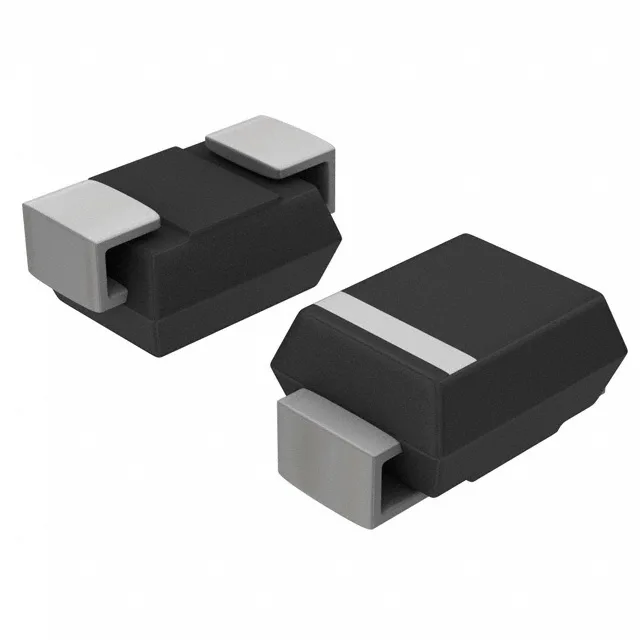
What 170 V standoff and 5 kW peak pulse mean for your rail
The 5.0SMDJ170A/TR13: This is a unidirectional Zener-based TVS — the 170 V reverse standoff voltage is the idle rail rating; the part stays off the circuit until a transient pushes the line above that threshold, at which point it clamps at 275 V maximum and shunts 18.2 A peak (10/1000 µs waveform). The 5000 W peak pulse rating sets the surge-handling margin: a part derated to 3 kW will let more clamping voltage through on a heavy spike, potentially exposing downstream semiconductors. For a 170 V rail — typical in telecom Rectifier-fed bus, 24-cell Li-ion stacks, or 250 VAC line-neutral industrial DC rails — this gives a healthy headroom above the nominal rail while staying below the common-mode surge voltage for the class.
What is not — and what that means for power-line vs signal-line protection
Power Line Protection is listed as No — this part is designed for signal or secondary rail protection, not as a dedicated mains-facing suppression element. A 170 V standoff is below the peak of a 240 VAC line (340 V peak), so it cannot be placed directly line-to-neutral without exceeding its standoff rating during normal operation. It fits downstream of a primary protection device on a regulated DC bus or a telecom -48 V rail, where the standoff rating comfortably clears the rail voltage and the clamping rating protects the load ICs from transients.
Active status and sourcing posture
YAGEO-branded parts in the 5.0SMDJ series are maintained in production, and the Tape & Reel / Cut Tape packaging option covers both high-volume SMT assembly and low-volume rework runs.