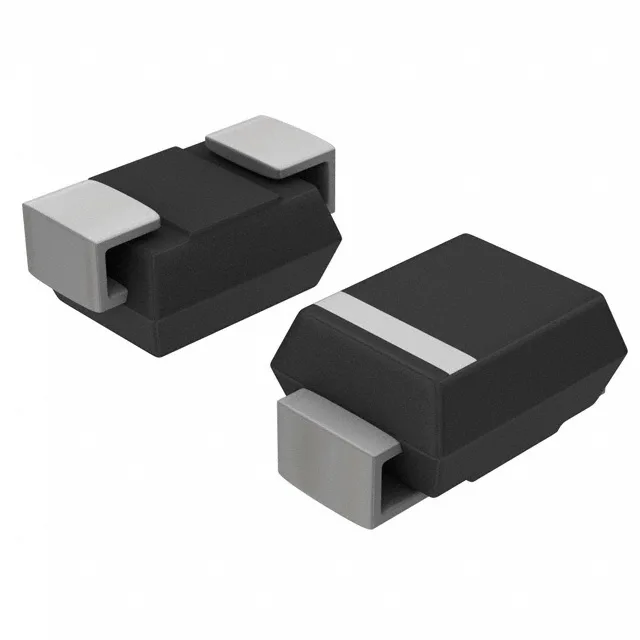
1.5kW peak pulse in DO-214AB — what the clamping chain means
The 1.5SMC6.8A/TR7: Working from standoff up: 5.8 V reverse standoff is the maximum voltage the TVS presents to the line in normal operation. The 6.45 V minimum breakdown is where the device begins conducting. At 144.8 A peak pulse the clamping voltage reaches 10.5 V maximum. The gap between 5.8 V standoff and 10.5 V clamping is the transient energy your downstream circuits see — in a 5 V rail the TVS clamps 4.7 V of headroom above the working voltage, which is usually enough for USB, CAN, and 24 V industrial control rails with appropriate filtering. For a board-level repair tech, the scorch mark on a failed TVS will be on the cathode pad — the Zener fires in the reverse direction when a transient exceeds the standoff. If the TVS went short, check the rail it was protecting: a shorted TVS often takes the downstream LDO or load with it.
Thermal and environmental profile
Operating junction temperature runs from -65°C to 175°C. That wide span is built for the thermal cycling you see in automotive under-hood environments and industrial enclosures without active cooling. The upper limit is junction-limited — keep the clamping event short and the PCB thermal pad properly soldered, or the transient thermal impedance RthJC pushes the junction above 175°C and the TVS goes into thermal runaway. Power Line Protection is listed as No — this part is not a mains-frequency surge arrester. It protects downstream ICs and load circuits from fast transients, not from AC line disturbances. Use a dedicated MOV or gas discharge tube at the mains input if that is the requirement.
Sourcing posture — active, quoted to order
No YAGEO successor or cross-reference is listed in the ledger, so a pin-compatible swap within the 1.5SMC family is the usual hedge if this exact code goes tight.