What the 154V standoff and 246V clamp mean for your protection window
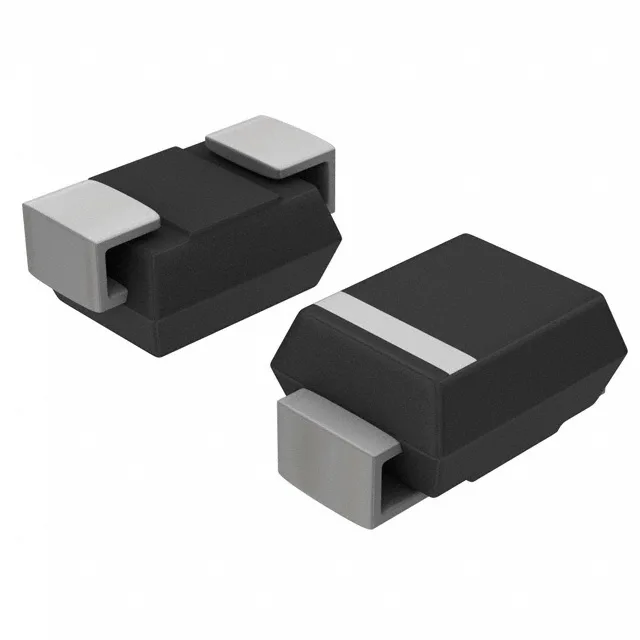
The 1.5SMC180A/TR13: It is a transient suppressor, not a voltage regulator — it clamps overvoltage spikes on a 154V nominal rail. The reverse standoff voltage is 154V — the line operates at or below this level without the diode conducting. Breakdown starts at 171V minimum, and the clamping voltage is held to 246V maximum at a peak pulse current of 6.2A. This gives a clear protection window: the TVS stays off during normal operation, turns on at 171V, and limits the surge to 246V. The DO-214AB (SMC) package is surface-mount and rated for the full 1500W pulse. The junction temperature range spans -55°C to 150°C, so it handles elevated ambient in industrial or automotive under-hood environments without derating the pulse capability prematurely.
Package and rework considerations
The DO-214AB (SMC) package has a large copper tab on the cathode side — the thermal pad area on the PCB sets the junction-to-ambient thermal resistance. For rework, the tab soaks heat; a preheat plate or bottom-side heater helps lift the part cleanly without lifting the pad. The package marking typically includes the polarity band and the voltage code — confirm the orientation before placement. The tape-and-reel (TR) option is standard for automated assembly; cut tape (CT) is available for prototypes.