Bidirectional clamping — one device for both polarities
The 1.5KE20CA/B: This is a bidirectional Zener TVS with a single channel. The reverse standoff voltage is 17.1 V; the protected rail must stay at or below that level during normal operation. Breakdown occurs at a minimum of 19 V, and the clamping voltage at peak pulse current is 27.7 V max.
This energy-handling figure determines whether the TVS survives a given surge without failing short — compare the expected transient energy in your system against the 1500 W rating at the clamping voltage. The part is marked as not intended for power line protection — it is a general-purpose signal or low-voltage DC rail suppressor, not a mains surge protector.
Through-hole DO-201 axial — board-fit note
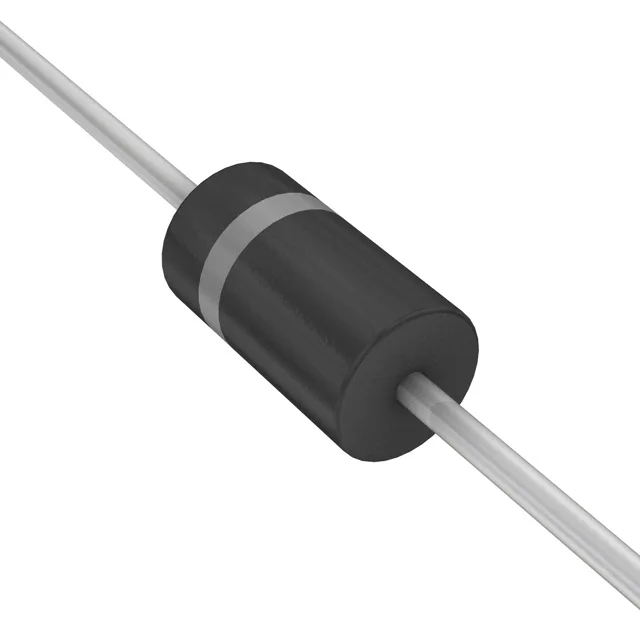
Packaged in a DO-201AA / DO-27 axial leaded form factor, with the supplier device package designated DO-201. The through-hole mounting suits point-to-point wiring, terminal blocks, or PCB layouts where a surface-mount TVS is not preferred for thermal or mechanical reasons. Supplied in a box — typical for axial-lead diodes in bulk or cut-tape quantities. The base product number is 1.5KE20, so the /B suffix denotes the bidirectional variant; the unidirectional version shares the same footprint.