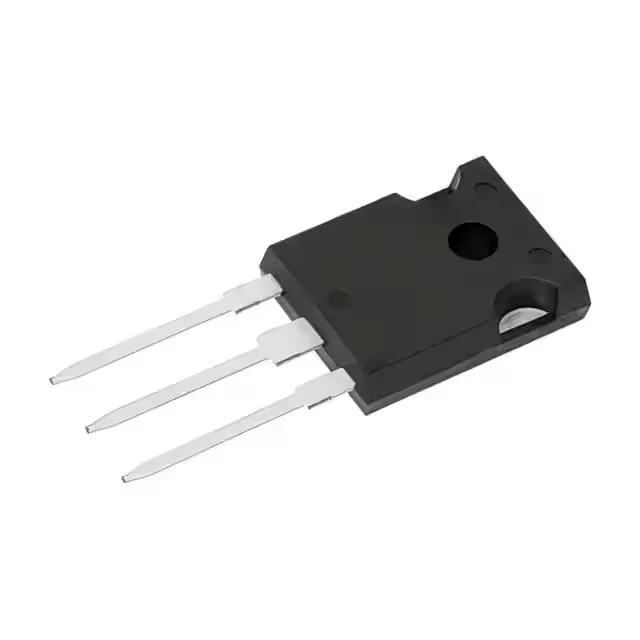
60 V, 30 A per diode — the headline numbers that define the load
The VX6060PW-M3/P: That 30 A figure is the continuous forward current each side can carry in a typical 60 V automotive or industrial DC bus circuit — the TO-247AD package's large tab handles the heat dissipation.
AEC-Q101 — the automotive reliability baseline
Qualified to AEC-Q101, the part is screened for the temperature and vibration profile of under-hood and chassis-mounted electronics.
Forward drop and leakage — the thermal trade-off
Forward voltage is 600 mV typical at 30 A — a low Vf for a 60 V trench Schottky, which keeps conduction losses under 18 W per diode at full current. Reverse leakage is 4 mA at 60 V, typical for this voltage class; leakage rises with junction temperature, so the thermal design should account for the increase above 125 °C.
Fast recovery — under 500 ns
The fast recovery spec (under 500 ns, above 200 mA) is standard for a Schottky — the majority-carrier structure inherently switches faster than a PN diode. In a 100 kHz boost converter or OR-ing diode application, the switching loss is negligible compared to the conduction loss.