1.2 kV blocking, 30 A RMS conduction — line-frequency phase control
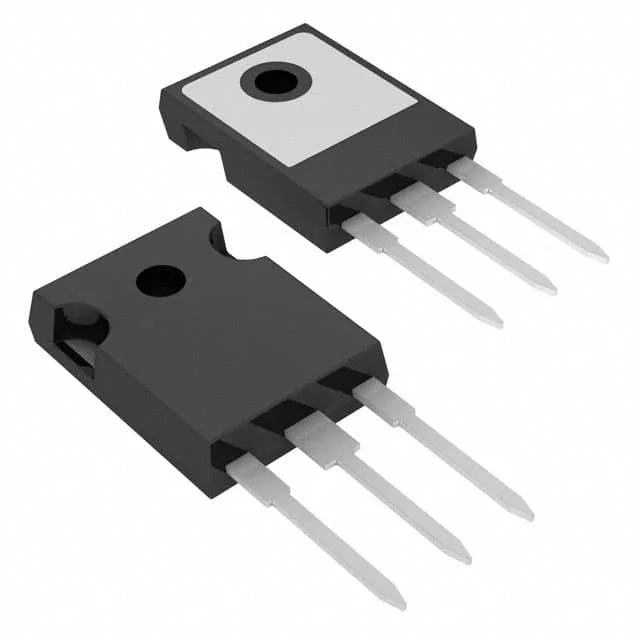
The Vishay VS-30TPS12-M3 is a standard-recovery SCR in a TO-247AC through-hole package, rated for 1.2 kV off-state voltage and 30 A RMS on-state current. It handles 250 A non-repetitive surge at 50 Hz, making it suited for motor drives, power supplies, and industrial heating controllers where line-frequency phase control is the primary switching mode.
Gate drive and trigger thresholds
Gate trigger current is 45 mA max, with a gate trigger voltage of 2 V max. The holding current is 150 mA, and off-state leakage is 10 mA max. These numbers tell you the gate driver needs to source at least 45 mA reliably at the trigger voltage — a standard logic-level output won't cut it; use a dedicated SCR driver or a transistor buffer. The 150 mA holding current means the load current must stay above that level to keep the SCR latched once triggered; below that, the device will commutate off.
Housed in a TO-247AC (TO-247-3) through-hole package, this SCR is designed for bolted or clip mounting to a heatsink. The 1.3 V on-state voltage at 20 A average means about 26 W conduction loss at full average current — plan the heatsink and airflow accordingly. The standard-recovery type is not intended for fast-switching applications; expect turn-off times in the tens of microseconds, which is fine for 50/60 Hz phase control but not for PWM or high-frequency inverters.