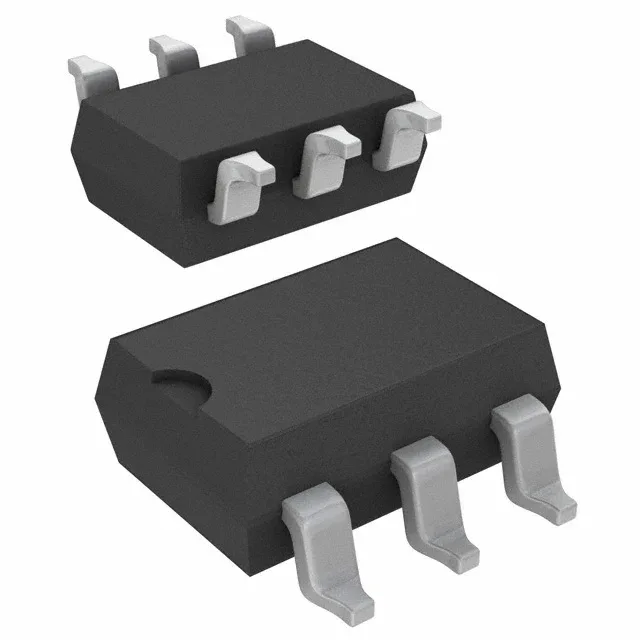
Triac output and isolation ratings — what they mean for the load circuit
The VO3062-X017T is a Vishay optoisolator with a Triac output, meaning it switches AC loads through an internal photo-Triac that is optically coupled to the LED input. The 5300Vrms isolation rating separates the control side from the load side — this is the figure that determines whether the part meets the safety isolation requirements for your application, such as in motor drives or industrial controls where the microcontroller must be galvanically isolated from the mains. The 600 V off-state voltage sets the maximum peak line voltage the Triac can block when off. For a 230 VAC or 277 VAC line, the peak is around 325 V or 390 V, so this part has margin. The static dV/dt rating of 1.5 kV/µs is the minimum rate of voltage rise the Triac can withstand without false triggering — important when switching inductive loads like relays or solenoids where the line transients can be sharp.
Zero-crossing circuit — why it matters for noise-sensitive loads
The zero-crossing circuit means the Triac only turns on when the AC voltage crosses zero, which reduces the inrush current and the electromagnetic interference generated at switch-on. This is the preferred variant for resistive loads like heaters or lamps where a soft start is beneficial, and for any circuit where conducted emissions must stay low. The LED trigger current (Ift) is 10 mA max, and the forward voltage (Vf) is 1.2 V typical. The DC forward current (If) is rated 60 mA max. These set the drive requirements from the microcontroller GPIO or a transistor driver — a 330-ohm series resistor on a 5 V supply delivers about 11 mA, which is above the 10 mA threshold.
Package, approvals, and temperature range
The part is housed in a 6-SMD Gull Wing package, surface-mount, with the supplier device package listed as 6-SMD. Approvals include cUR, UR, and VDE — these certify the part for use in equipment sold into North American and European markets, covering the safety isolation requirements per UL 1577 and EN 60747-5-5. Lifecycle status is Active, and the part is ROHS3 Compliant.