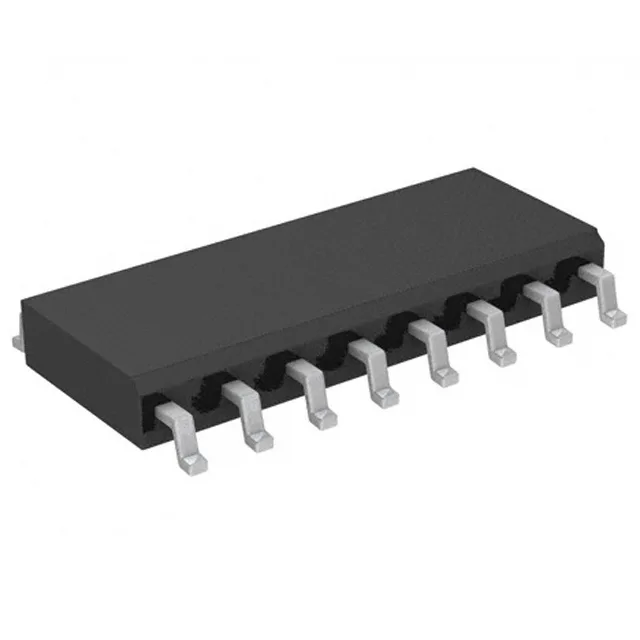
Vishay TCMT4606 — Optoisolators

TCMT4606 Optocoupler, 4-Ch, 3750Vrms, 16-SOIC, Active

MPNTCMT4606
End of Life

Vishay TCMT4606 quad-channel phototransistor optocoupler, 3750Vrms isolation, 100-300% CTR at 5mA, 70V output, 50mA/ch, 16-SOIC, -40 to 100°C, active.

$2.31Ref. price · indicative, final on quote
Packaging16-SOIC (0.173", 4.40mm Width)
StockContact for availability
MOQ1 pcs
  • 100% new & originalTraceable channels only — no refurbs, no pulls, no remarked parts.
  • Date & lot codes on quoteStated per line before you commit; label photos on request.
  • MSL-compliant ESD packingMoisture-sealed bags with indicator cards; reels photo-verified.
  • PayPal buyer protectionPay by T/T, PayPal or Payoneer — card payments covered end to end.

Specifications

TCMT4606 Technical Specifications
ParameterValue
Input typeAC, DC
Output typeTransistor
Mounting typeSurface Mount
Voltage - isolation3750Vrms
Voltage - output70V
Voltage - forward (Vf)1.35V
Current - output (Channel)50mA
Current transfer ratio300% @ 5mA
Current - DC forward (If)60 mA
Operating temperature-40°C ~ 100°C
PackageTape & Reel (TR); Cut Tape (CT)
Case16-SOIC (0.173\", 4.40mm Width)
Number of channels4
Vce saturation300mV
Rise (Fall time)3µs, 4.7µs
Turn on (Turn off time)6µs, 5µs

Product details

Quad phototransistor optocoupler in 16-SOIC

The Vishay TCMT4606 is a 4-channel phototransistor optocoupler in a 16-SOIC package, providing 3750Vrms galvanic isolation between input and output. Each channel can handle up to 50mA output current and 70V across the transistor, making it suitable for logic-level interfacing, PLC I/O modules, and industrial sensor isolation where board space is tight — four channels in one SOIC footprint instead of four separate DIP-4 parts.

CTR range and drive margin

The current transfer ratio spans 100% to 300% at a forward current of 5mA. That means with 5mA into the LED, the output transistor can sink between 5mA and 15mA — enough to drive a CMOS logic input or a small relay coil directly. The wide CTR spread (3:1) is typical for phototransistor couplers; design the pull-up resistor for the minimum CTR to guarantee logic-level switching across all temperature and aging conditions.

Switching speed and timing budget

Rise and fall times are 3µs and 4.7µs typical; turn-on and turn-off times are 6µs and 5µs typical. This part is not for high-speed isolation — expect usable bandwidth around 10–20 kHz. For 100 kHz+ isolated data, look at a digital isolator or high-speed optocoupler. But for 50/60 Hz mains sensing, relay drive, or slow digital signals, the TCMT4606 is perfectly adequate and avoids the cost of faster parts.

AC/DC input flexibility

The input stage accepts both AC and DC drive. With AC input, the LED conducts on both half-cycles, which is useful for zero-crossing detection or line-voltage monitoring without external rectification. For DC logic, a series resistor sets the forward current to 5–60 mA (max 60 mA absolute). Typical forward voltage is 1.35V at 5mA, compatible with 3.3V and 5V logic families.

Temperature range and environment

It does not reach the 125°C required for automotive under-hood or downhole applications. The 16-SOP (SOIC-16) body is 4.40mm wide, surface-mount, and MSL 1 (moisture sensitivity level per the datasheet), so no bake step before reflow if the bag seal is intact.

Lifecycle and sourcing

It is ROHS3 compliant. No known pin-compatible second source from another manufacturer, but the TCMT4603 (same package, different CTR bin) is a functional alternative within the same family if the CTR range can be adjusted.

Frequently asked questions

What is the current transfer ratio (CTR) of TCMT4606?

The CTR is 100% minimum to 300% maximum, tested at a forward current of 5mA. This means with 5mA LED drive, the output transistor can sink 5mA to 15mA.

Can TCMT4606 replace TCMT4603?

The TCMT4603 is a sibling in the same family with a different CTR bin. The TCMT4606 covers 100-300% CTR; the TCMT4603 has a different range. They are pin-compatible in the same 16-SOIC package, so substitution is possible if the CTR specification for the application allows the wider or shifted range.