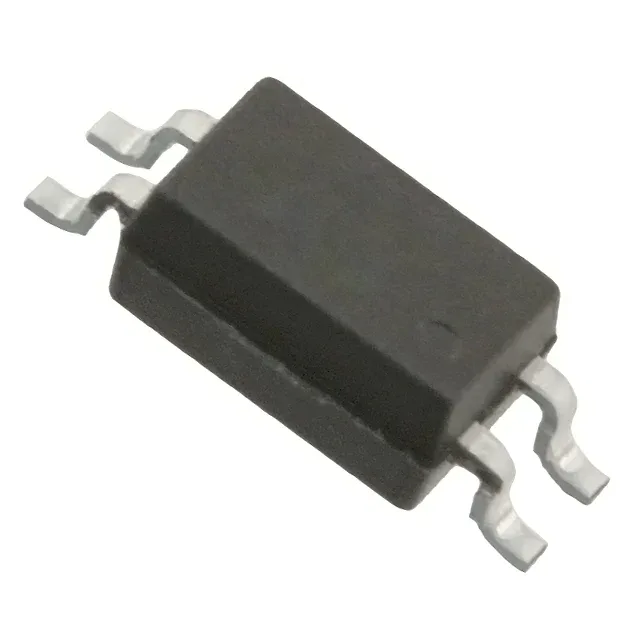
The TCMT1113 is a single-channel phototransistor optocoupler from Vishay, built for galvanic isolation in industrial and power-conversion circuits. It provides 3750Vrms of isolation between input and output, which covers reinforced insulation requirements for many mains-referenced applications like motor drives, switched-mode power supplies, and PLC digital inputs. The input is a DC-driven infrared LED (1.15V forward voltage typical, 50mA max forward current), and the output is a phototransistor rated for up to 70V and 50mA continuous. The current transfer ratio is specified at 100% minimum and 200% maximum when the LED is driven at 10mA, giving a predictable gain window for logic-level interface design. The 4-SOIC package (4.40mm body width) is a standard optocoupler footprint, reworkable with hot air and easy to inspect.
Switching speed and timing — what the numbers mean
Rise and fall times are 3µs and 4µs typical; turn-on and turn-off times are 5µs and 3µs typical. This puts the TCMT1113 in the medium-speed class — fine for 10-100 kHz PWM feedback, status polling, and relay drivers, but not for high-speed data isolation above a few hundred kHz. For faster switching, you would look at a digital isolator or a high-speed optocoupler with a logic output.
The 4-SOIC package has a 0.173-inch (4.40mm) body width and a 1.27mm lead pitch — standard for SOIC-4 optocouplers. The leads are gull-wing, easy to solder and inspect under a microscope.