What the 5000Vrms isolation and Darlington output mean for your BOM
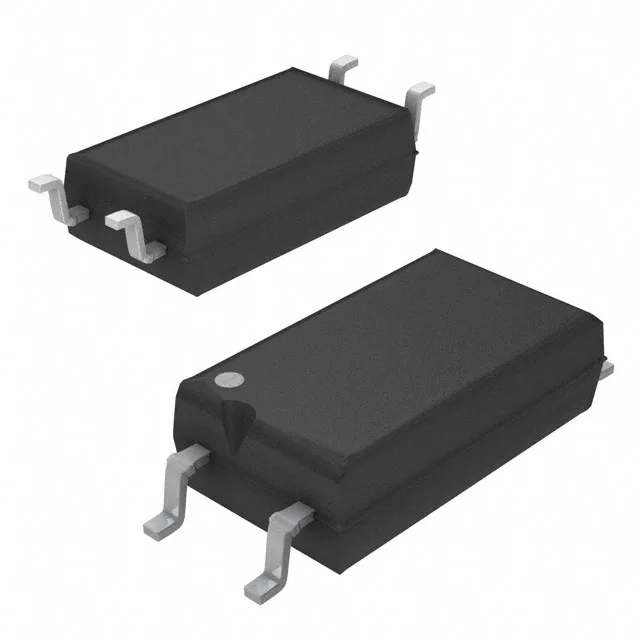
The TCLD1000 is a single-channel Darlington optoisolator in a 4-SMD gull-wing package (4-SOP), rated for 5000Vrms isolation between input and output. That isolation voltage qualifies it for reinforced insulation in industrial motor drives, medical power supplies, and any design where a galvanic barrier must survive a 5kV transient without breakdown. The Darlington output stage gives a minimum current transfer ratio of 600% at just 1 mA forward current, so the LED drive current can be kept low while still switching a 35 V, 80 mA load on the output side. This makes it a good fit for PLC input modules, relay drivers, and isolated sensor interfaces where the microcontroller's GPIO has limited drive strength.
The trade-off is switching speed: typical rise time is 300 µs and typical turn-off time is 250 µs, which limits it to low-frequency or DC-level shifting applications. For higher-speed isolation (e.g., 10 Mbps digital isolators), this is not the right part; but for 50/60 Hz line sensing, relay coil driving, or status feedback, the 300 µs edge is plenty fast.
The 4-SMD gull-wing package (supplier device package 4-SOP) is a standard surface-mount footprint for optocouplers. The 1.1 V typical forward voltage and 60 mA max forward current are typical for an IR LED; the 1 V Vce saturation at 80 mA means the Darlington drops about a volt when on, which is fine for driving a 5 V or 3.3 V logic input or a small relay coil.