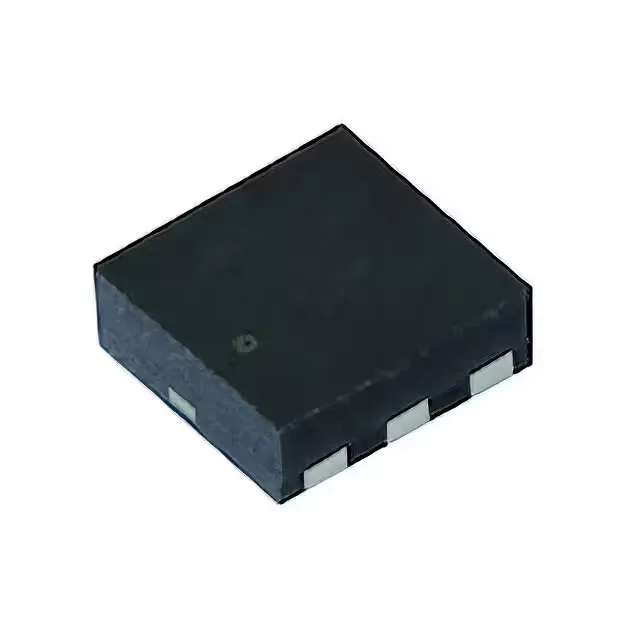
The SQA602CEJW-T1_GE3: This voltage class comfortably handles 12 V nominal loads with headroom for load-dump transients and also covers 24 V truck/bus electrical systems where the steady-state bus sits around 28 V. Gate charge is 8.2 nC at 10 V, a moderate figure that a standard gate-driver IC or MCU GPIO with a series resistor can handle without excessive switching losses at typical automotive PWM frequencies (20-400 Hz for solenoids, up to 20 kHz for LED dimming). Drive voltage is specified at both 4.5 V and 10 V for the minimum and maximum Rds(on) respectively, so this MOSFET can be driven from a 5 V logic rail at reduced efficiency or from a 10-12 V gate supply for lowest conduction loss.
AEC-Q101 qualification and 175°C junction — under-hood ready
The part carries AEC-Q101 qualification, the automotive discrete semiconductor stress-test standard covering temperature cycling, humidity bias, high-temperature reverse bias, and ESD robustness. Combined with a -55°C to 175°C junction temperature range, this MOSFET is suited for engine-bay and transmission-control environments where ambient temperatures exceed 125°C and the junction sees additional self-heating under load. Lifecycle status is active per Vishay's product record, and the part is ROHS3 compliant. This means the design-in is supported with full PPAP documentation available through the supply chain — no end-of-life clock ticking for new programs.
PowerPAK SC-70-6 with wettable flank — automated inspection compatible
The PowerPAK SC-70-6 package (supplier device package PowerPAK SC-70W-6) is a compact 6-lead surface-mount package with an exposed drain pad for thermal management. The wettable flank option means the side terminations have a solderable surface — this enables automated optical inspection (AOI) of the solder joints after reflow, a requirement for many automotive Tier-1 assembly lines that cannot rely on bottom-side-only inspection.