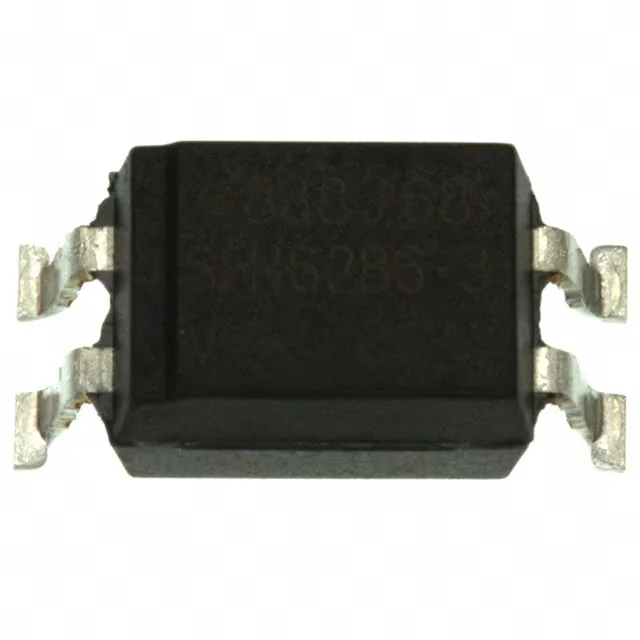
The SFH6286-3T is a single-channel Vishay optocoupler with a transistor output, rated for 5300Vrms isolation between input and output. That isolation voltage qualifies it for reinforced insulation in mains-referenced circuits — think AC-line monitoring, motor-drive feedback, or any board where the low-voltage side must stay galvanically separated from a hazardous potential. The input LED accepts both AC and DC drive, so you can wire it directly across an AC line through a current-limiting resistor without worrying about polarity — a common trick in phase-cut dimmer or zero-cross detection circuits.
At the minimum CTR, 1 mA into the LED gives at least 1 mA of collector current in the output transistor — enough to saturate a logic input or drive a small relay coil directly. The wide max spread (320%) means you should design for the min CTR and let the extra margin absorb LED ageing and temperature drift. Output transistor can handle up to 55 V collector-emitter and 50 mA continuous.
Switching speed and temperature range
Typical turn-on time is 6 µs, turn-off 5.5 µs; rise and fall times are 3.5 µs and 5 µs respectively. That puts the usable switching frequency around a few tens of kHz — fine for 50/60 Hz line sensing, relay drivers, or slow digital isolation, but not for high-speed data links. Operating temperature spans -55°C to 100°C, covering industrial enclosures and under-hood automotive environments where the ambient may hit 85°C with self-heating margin.
Package and compliance
The Gull Wing leads provide good solder-joint inspection access and moderate thermal cycling reliability compared to a flat-lead package. Vishay lists this part as Active in production and ROHS3 compliant — no exemption-based restrictions for EU markets.