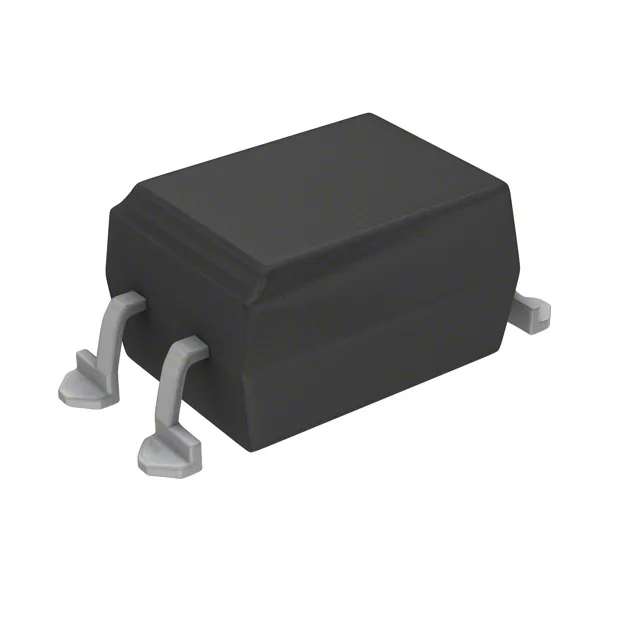
Vishay SFH6186-4 — Optoisolators

SFH6186-4 Optoisolator, 5300Vrms, 160-320% CTR

MPNSFH6186-4
End of Life

Vishay SFH6186-4 optocoupler, DC input, transistor output, 5300Vrms isolation, 160-320% CTR at 1mA, 55V output, 4-SMD gull wing package, -55°C to 100°C, Tube.

$0.9Ref. price · indicative, final on quote
Packaging4-SMD, Gull Wing
StockContact for availability
MOQ1 pcs
  • 100% new & originalTraceable channels only — no refurbs, no pulls, no remarked parts.
  • Date & lot codes on quoteStated per line before you commit; label photos on request.
  • MSL-compliant ESD packingMoisture-sealed bags with indicator cards; reels photo-verified.
  • PayPal buyer protectionPay by T/T, PayPal or Payoneer — card payments covered end to end.

Specifications

SFH6186-4 Technical Specifications
ParameterValue
Input typeDC
Output typeTransistor
Mounting typeSurface Mount
Voltage - isolation5300Vrms
Voltage - output55V
Voltage - forward (Vf)1.1V
Current - output (Channel)50mA
Current transfer ratio320% @ 1mA
Current - DC forward (If)60 mA
Operating temperature-55°C ~ 100°C
PackageTube
Case4-SMD, Gull Wing
Number of channels1
Vce saturation400mV
Rise (Fall time)3.5µs, 5µs
Turn on (Turn off time)6µs, 5.5µs

Product details

What this optocoupler is and where it goes

The Vishay SFH6186-4 is a single-channel phototransistor optocoupler with a DC input LED and a 5300 Vrms isolation rating. It comes in a 4-SMD gull-wing package, which is hand-solderable and easy to inspect under a microscope — a relief if you are reworking a board that already has components on the other side. The 160% to 320% current transfer ratio at 1 mA forward current means you can drive the LED with a standard logic-level signal and still get a clean logic output on the other side of the isolation barrier.

The CTR is the ratio of output transistor current to input LED current. At 1 mA forward current, the SFH6186-4 guarantees a minimum CTR of 160% and a maximum of 320%. That means with 1 mA into the LED, the output transistor can sink at least 1.6 mA and up to 3.2 mA — enough to pull a 5 V CMOS or TTL input low through a reasonable pull-up resistor. The 55 V output rating gives headroom for driving relays or higher-voltage logic families as well. If you are running the LED at a lower current to save power, the CTR will drop; the datasheet curve (not reproduced here) shows the typical behaviour, but the guaranteed numbers at 1 mA are the ones to design to.

Isolation voltage and temperature range

The 5300 Vrms isolation rating qualifies this part for reinforced insulation in mains-connected equipment — think industrial motor drives, power supplies, and medical devices where you need to protect low-voltage control circuitry from high-voltage transients. The 6 µs turn-on and 5.5 µs turn-off times are adequate for 10-100 kHz switching or status feedback; for faster data rates you would look at a logic-output optocoupler.

Package and rework notes

The 4-SMD gull-wing package has a 2.54 mm pin pitch and stands off the board, so you can get a soldering iron tip under the leads if you need to replace it. The part ships in Tube, which is fine for prototyping and low-volume production; if you need Tape & Reel for automated assembly, check the SFH6186-4T variant.

Frequently asked questions

What is the current transfer ratio (CTR) range of SFH6186-4?

The SFH6186-4 guarantees a CTR range of 160% minimum to 320% maximum, both measured at 1 mA forward current. This is the '4' bin in the SFH6186 family.

What is the difference between SFH6186-4 and SFH6186-3?

The difference is the CTR bin. The SFH6186-3 has a CTR range of 100% to 200% at 1 mA, while the SFH6186-4 covers 160% to 320%. The SFH6186-4 gives you more output drive for the same LED current, which can be useful if you need to drive a heavier load or want more margin on the logic threshold. Both parts are pin-compatible and share the same package and isolation rating.

Is SFH6186-4 compatible with 5V logic systems?

Yes. With a minimum CTR of 160% at 1 mA, the output transistor can sink over 1.6 mA — enough to pull a 5 V TTL or CMOS input low through a 2.2 kΩ pull-up resistor. The 55 V output rating also means it can interface with higher-voltage logic families.