5300 Vrms isolation — what it buys you
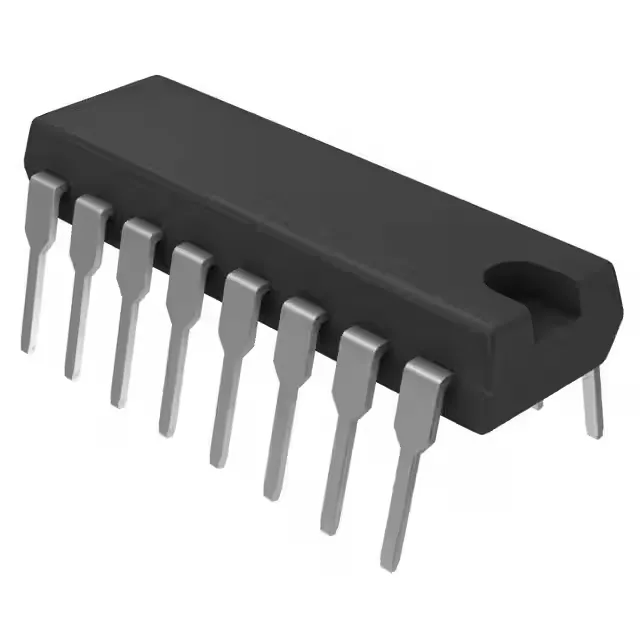
The Vishay ILQ620GB is a quad-channel optocoupler that packs four independent transistor-output channels into a single 16-pin DIP package. Its headline rating is 5300 Vrms of isolation between input and output, which is the figure that decides where this part goes in a design — think industrial motor drives, PLC I/O modules, medical patient-monitoring interfaces, or any system where a galvanic barrier must separate a high-voltage domain from a low-voltage control side. The AC/DC input type means the LED side can be driven by either a DC logic signal or an AC line-derived waveform, which is less common among optocouplers and saves an external rectifier stage when coupling from, say, a 50/60 Hz mains sense transformer.
That -55°C low end matters for outdoor telecom cabinets, engine-bay electronics, or satellite-adjacent gear that sees cold-soak. The 100°C upper limit is typical for industrial optocouplers; if your design needs 125°C ambient, you would look at a different grade. The transistor output is rated for 70 V maximum and 50 mA per channel, with a typical Vce saturation of 400 mV at the test current — fine for driving logic inputs, relay coils, or low-side switched loads within those limits.
Switching speed and timing
Turn-on time is 3 µs typical, turn-off 2.3 µs typical; rise and fall times are 20 µs and 2 µs respectively. These are not high-speed optocouplers — you would not use this for isolated SPI or CAN at megabit rates. But for 10 kHz PWM, 50/60 Hz zero-cross detection, or status feedback from a contactor, the timing is more than adequate. The current transfer ratio (CTR) is specified at 100% minimum to 600% maximum at 5 mA forward current, which gives a wide operating margin for driving loads with modest LED drive current.
Housed in a 16-DIP (0.300", 7.62 mm) through-hole package. The through-hole format is a deliberate choice for high-reliability or manual-assembly environments — no reflow profile, no MSL concerns beyond the standard moisture sensitivity of the epoxy body. The 0.300" width is the narrow DIP variant, so it fits standard 0.1" pitch prototyping boards. If your BOM is moving to all-SMT, this part will stand out as the lone through-hole item; plan for a hand-solder or selective-solder step.
For dual-source planning, Vishay offers a broad family of quad-channel optocouplers in the same DIP-16 footprint — the ILQ620GB is the AC/DC input variant, while siblings with DC-only input exist. No pin-compatible second source from another manufacturer is listed in the record, so stick with Vishay for this exact order code.