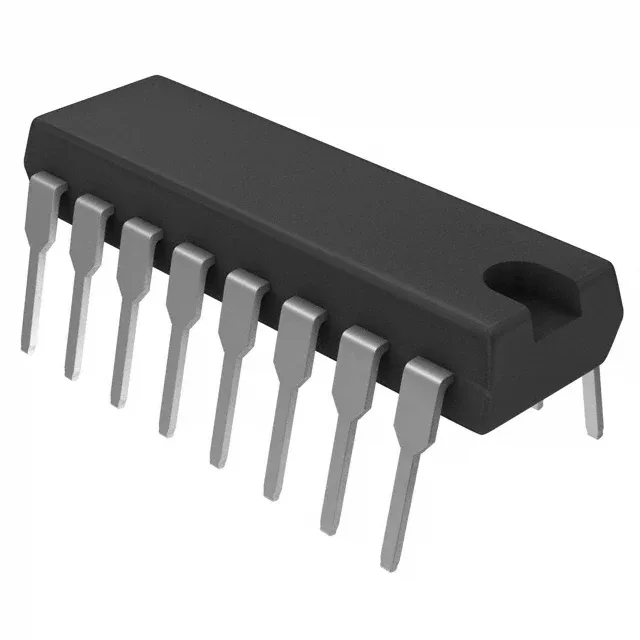
What the 5300Vrms isolation and Darlington output mean for your BOM
The ILQ55 is a 4-channel Darlington-output optocoupler in a 16-DIP through-hole package, rated for 5300Vrms isolation between input and output. That isolation voltage is the spec that decides fit: it qualifies the part for industrial motor drives, AC-line monitoring, power-supply feedback loops, and any application where galvanic separation is required for safety or noise immunity. The Darlington output gives you a current-transfer ratio of 100% minimum at 10mA forward current, so a modest LED drive can switch up to 125mA per channel at up to 55V on the output side — enough to drive a relay coil, a small solenoid, or a PLC input directly without an external transistor.
Temperature range and switching speed — where this part works and where it doesn't
Rise and fall times are 10µs and 35µs typical — fine for 10kHz switching or relay drive, but too slow for high-speed data isolation or digital communication links. If you need sub-microsecond response, look at a logic-output optocoupler instead.
Package and mounting — through-hole matters for this class
Through-hole mounting is preferred in high-vibration environments (motor drives, heavy machinery) where a surface-mount optocoupler might crack a solder joint over time. The supplier device package is 16-DIP, so the mechanical outline is consistent across the Vishay IL-series family.
The ROHS3 compliance covers the current EU exemption landscape, which simplifies export compliance for finished goods.