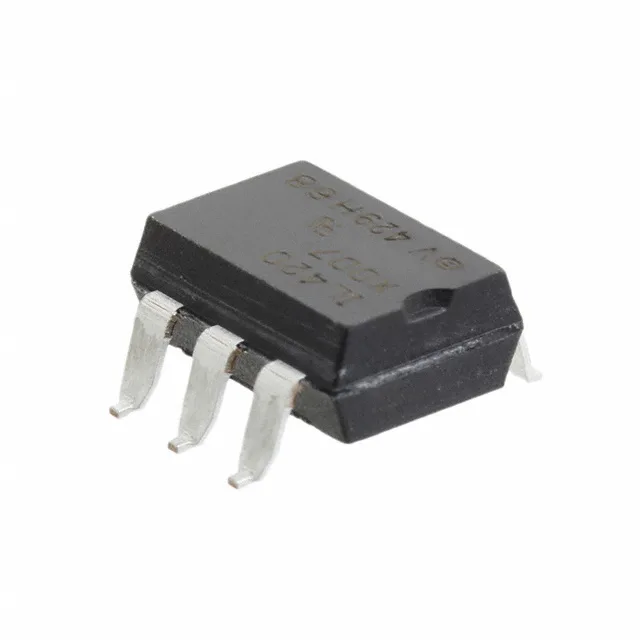
Vishay IL4208-X009 — Optoisolators

IL4208-X009 Vishay Triac Optoisolator – 5300 Vrms

MPNIL4208-X009
End of Life

Vishay IL4208-X009, single-channel triac-output optoisolator, 5300 Vrms isolation, 800 V off-state, 10 kV/µs minimum static dV/dt, surface-mount 6-SMD package, tube delivery.

$3.89Ref. price · indicative, final on quote
Packaging6-SMD
RoHSROHS3 Compliant
Independent supplier — new & surplus stockAuthenticity-screened · ESD-safe packingListing updated Aug 2026

Specifications

IL4208-X009 specifications
ParameterValue
Output typeTriac
MountingSurface Mount
Voltage - isolation5300Vrms
Voltage - off state800 V
Voltage - forward (Vf)1.16V
Current - hold500µA
Current - DC forward (If)60 mA
Current - LED trigger (Ift)2mA
Current - on state (It (RMS))300 mA
Operating temperature-55°C ~ 100°C
Approval agencyCQC, CSA, cUR, UR
PackageTube
Turn on time35µs
Case6-SMD
Channels1
Static dV (dt)10kV/µs
Zero crossing circuitNo

Product details

Triac output for 230 VAC line switching

The IL4208-X009 is a single-channel triac-output optoisolator from Vishay, specified for 5300 Vrms isolation and 800 V off-state voltage — a combination that directly suits 230 VAC line switching with a healthy margin on the blocking voltage. The 10 kV/µs minimum static dV/dt rating means the output triac will not false-fire on fast-rising transients from inductive loads like motors, contactors, or solenoids.

Drive current and on-state limits

On-state RMS current is rated at 300 mA, which covers small AC loads such as relays, pilot lamps, or solid-state relay input stages, but not high-power contactors directly. Hold current is 500 µA; below that the triac will commutate off at zero-cross, which is expected for a non-zero-crossing device (no zero-cross circuit is present).

Approvals include CQC, CSA, cUR, and UR — relevant for equipment destined for North American or Chinese markets where agency marks are required.

Frequently asked questions

Is IL4208-X009 suitable for 230 VAC switching?

Yes. The 800 V off-state voltage gives a derating margin above 230 VAC peak (325 V), and the 5300 Vrms isolation meets reinforced insulation requirements for line-voltage applications.