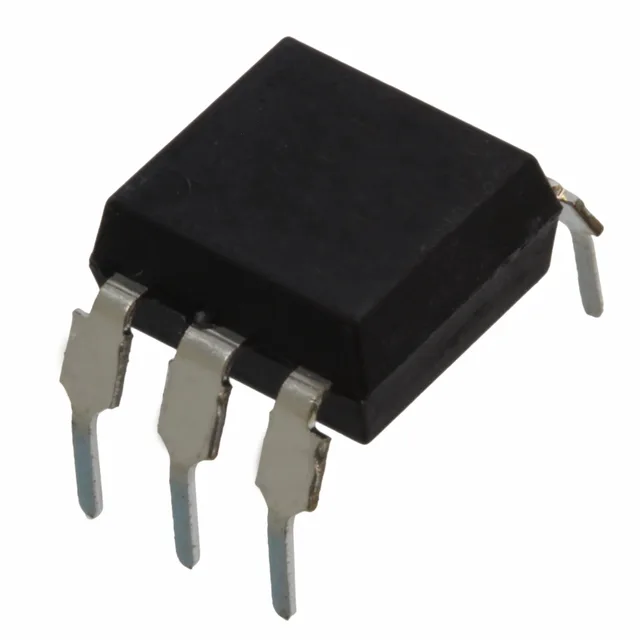
Vishay IL420-X016 — Optoisolators

IL420-X016 Optotriac, 5300Vrms Isolation, 600V Off-State

MPNIL420-X016
End of Life

Vishay IL420-X016 optoisolator, triac output, 5300Vrms isolation, 600V off-state, 300mA RMS on-state, 10kV/µs dV/dt, through-hole 6-DIP package, -55°C to 100°C.

$3.64Ref. price · indicative, final on quote
Packaging6-DIP (0.400", 10.16mm)
RoHSROHS3 Compliant
Independent supplier — new & surplus stockAuthenticity-screened · ESD-safe packingListing updated Aug 2026

Specifications

IL420-X016 specifications
ParameterValue
Output typeTriac
MountingThrough Hole
Voltage - isolation5300Vrms
Voltage - off state600 V
Voltage - forward (Vf)1.16V
Current - hold500µA
Current - DC forward (If)60 mA
Current - LED trigger (Ift)2mA
Current - on state (It (RMS))300 mA
Operating temperature-55°C ~ 100°C
Approval agencyCQC, CSA, cUR, UR, VDE
PackageTube
Turn on time35µs
Case6-DIP (0.400\", 10.16mm)
Channels1
Static dV (dt)10kV/µs
Zero crossing circuitNo

Product details

This is the part's defining safety spec — it allows the low-voltage control side (microcontroller GPIO, logic-level signal) to switch a 600 V off-state AC load while maintaining reinforced insulation. The 6-DIP through-hole package (0.400" lead spacing) is the standard footprint for this class of industrial optotriac, and the -55°C to 100°C operating range covers most motor-drive, HVAC, and appliance environments.

10 kV/µs dV/dt — false-trigger immunity in noisy environments

The minimum static dV/dt of 10kV/µs means the output triac will not falsely trigger from fast voltage transients on the AC line — the kind you see from inductive load switching, motor brushes, or relay contact bounce. This is a key parameter for industrial and appliance designs where the optotriac sits on a shared noisy mains bus. The 2 mA maximum LED trigger current keeps the drive requirement low enough for a standard microcontroller GPIO through a current-limiting resistor.

Frequently asked questions

Does IL420-X016 have zero crossing detection?

No. The zero crossing circuit is not present. The triac can be triggered at any phase angle, which is useful for phase-control dimming but does not provide the soft turn-on of a zero-cross variant.