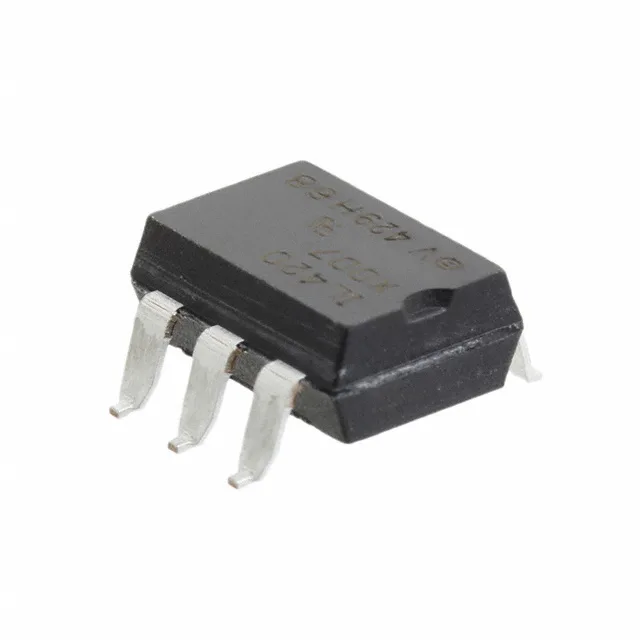
The IL4108-X009T is a single-channel optoisolator with a triac output, built to switch AC loads from a low-voltage control side while keeping 5300 Vrms of galvanic isolation between the two domains. The 800 V off-state rating means it can block the full peak of a 277 VAC line (or a 480 VAC line with margin) when the triac is off — the first check when you're replacing a blown opto on a motor-drive or industrial relay board. The zero-crossing circuit turns on the triac only near the AC zero crossing, which cuts inrush current and EMI on resistive or lightly inductive loads; if you need phase-angle control for dimming or soft-start, you'd reach for the non-zero-crossing variant instead.
dV/dt immunity — why 10 kV/µs matters
The minimum static dV/dt of 10 kV/µs tells you the output triac won't falsely trigger when a fast voltage transient slams across its terminals — the kind of spike you get from contactor bounce, motor commutation, or a nearby lightning strike on the mains. If you've ever seen a triac latch on and stay on after a transient, you know this spec is the difference between a board that runs for years and one that fails mysteriously. The 35 µs turn-on time is fast enough for most 50/60 Hz switching but won't work for high-frequency PWM.
It holds CSA and UR approvals, which simplifies acceptance into UL-listed equipment and Canadian-market builds.