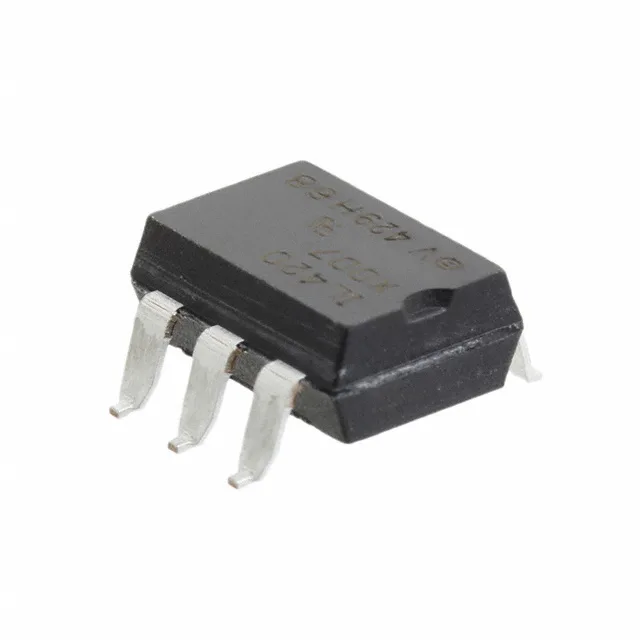
The Vishay IL410-X007T is a single-channel optoisolator with a Triac output, delivering 5300Vrms of galvanic isolation between the LED input and the output triac. The 600 V off-state voltage rating covers most single-phase and many three-phase line voltages with margin, and the zero-crossing circuit means the triac only turns on near the AC zero crossing, which limits inrush current into capacitive or cold-filament loads.
10 kV/µs dV/dt — the spec that saves the snubber
A minimum static dV/dt of 10kV/µs is the headline dynamic rating here. In plain terms: when the triac is off and a fast voltage transient appears across it — from an inductive load switching off, a relay bounce, or a mains spike — the internal phototriac won't falsely trigger. That 10kV/µs figure is high enough that many designs can omit the usual RC snubber across the output, saving two components and some board area. If you have ever debugged a random half-cycle conduction on a phase-control board, this is the spec that prevents it.
That -55°C tail matters for outdoor telecom cabinets in northern winters, cold-chain storage, or aircraft bay environments that see -40°C soak. The 100°C ceiling is fine for most indoor industrial panels and motor drives, but if your enclosure sits near a heat sink or in direct sun, check the junction temperature budget against the 300 mA on-state current.
LED drive and output ratings — sizing the input resistor
Typical forward voltage is 1.16 V, so at 5 V logic a 1.8 kΩ resistor sets the LED current near 2 mA, comfortably above the trigger threshold. The maximum DC forward current is 60 mA, giving headroom for higher drive if you need faster turn-on, but the 35 µs turn-on time is already fast enough for 50/60 Hz line-cycle switching. On the output side, the triac handles 300 mA RMS continuous — enough for a small relay coil, a 5 W indicator lamp, or a solid-state relay driver. Hold current is 500 µA, which means the load must draw at least that much to keep the triac latched once triggered; below that the triac drops out at the next zero crossing.
ROHS3 compliant and listed with CSA and UR agency approvals, so it passes the compliance gate for North American and EU industrial equipment without a waiver. Cut Tape is also available for prototype quantities.