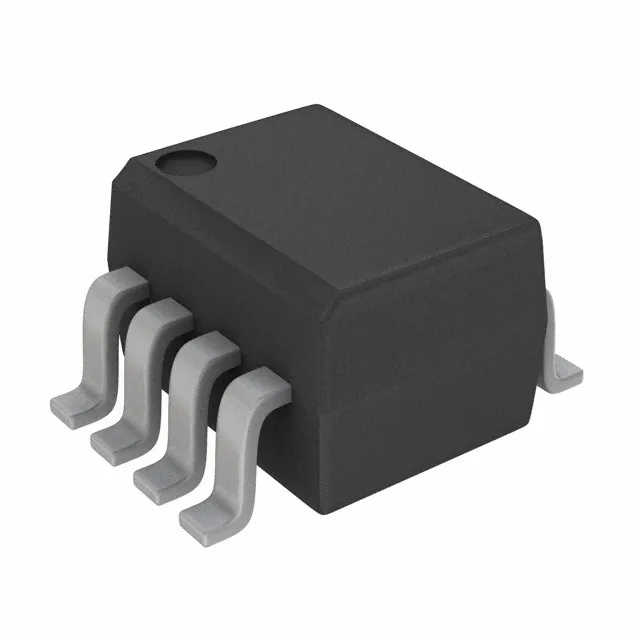
Vishay IL222AT — Discrete Semiconductors

IL222AT Optocoupler, 4000Vrms Darlington Output, 8-SOIC

MPNIL222AT
End of Life

Vishay IL222AT, 1-channel optocoupler, DC input, Darlington with base output, 4000Vrms isolation, 200% min CTR at 1mA, 8-SOIC surface mount, -55°C to 100°C, ROHS3 compliant.

$1.1Ref. price · indicative, final on quote
Packaging8-SOIC (0.154", 3.90mm Width)
RoHSROHS3 Compliant
Independent supplier — new & surplus stockAuthenticity-screened · ESD-safe packingListing updated Aug 2026

Specifications

IL222AT specifications
ParameterValue
Input typeDC
Output typeDarlington with Base
MountingSurface Mount
Voltage - isolation4000Vrms
Voltage - output30V
Voltage - forward (Vf)1V
Current transfer ratio200% @ 1mA
Current - DC forward (If)60 mA
Operating temperature-55°C ~ 100°C
PackageTape & Reel (TR); Cut Tape (CT)
Case8-SOIC (0.154\", 3.90mm Width)
Channels1
Vce saturation1V

Product details

4000Vrms isolation with Darlington gain

The Vishay IL222AT is a single-channel optocoupler that combines a DC-input LED with a photodarlington output transistor plus a base-access pin. The 4000Vrms isolation rating makes it a fit for applications where galvanic isolation is required between a low-voltage control side and a higher-voltage power or sensor side—think industrial PLC I/O modules, motor-drive feedback, or isolated switching power supplies. The Darlington output delivers a 200% minimum current transfer ratio at only 1 mA forward current, meaning the LED side draws minimal current while the output side can switch up to 30V with a Vce saturation of 1V max. That gain is what lets you drive a relay coil or a logic input from a microcontroller pin through a single resistor.

The 8-SOIC package is a common 3.90mm-wide footprint that reflows easily and keeps board area tight. Surface-mount assembly is standard for volume production, and the ROHS3 compliance avoids the REACH paperwork hassle.

ROHS3 compliant.

Frequently asked questions

Does IL222AT have a base resistor?

The IL222AT output is a Darlington pair with a base-access pin, not an integrated base resistor. An external base resistor can be added if needed for switching speed or noise immunity, but the part is designed to operate with the base pin either connected to a control signal or left open for standard photodarlington operation.