What the clamping spec means for your automotive bus
The 1N6279AHE3_A/C: The 1.5 kW peak pulse rating defines the surge energy this diode absorbs before it clips — the 30.6 V clamping voltage at 49 A peak pulse current is the clamped voltage the downstream load actually sees when a transient arrives. A TVS that clamps at 30.6 V protects a 24 V nominal rail from spikes that would otherwise stress the input stages of ECUs, sensors, and infotainment modules on the automotive 12 V bus. The reverse standoff voltage of 18.8 V typ means the diode presents a high-impedance path during normal operation — it only transitions into avalanche breakdown when the line voltage exceeds the standoff threshold by the breakdown minimum of 20.9 V, so the protected circuit runs undisturbed at nominal bus voltage.
AEC-Q101 qualification — this is not a rebranded industrial part
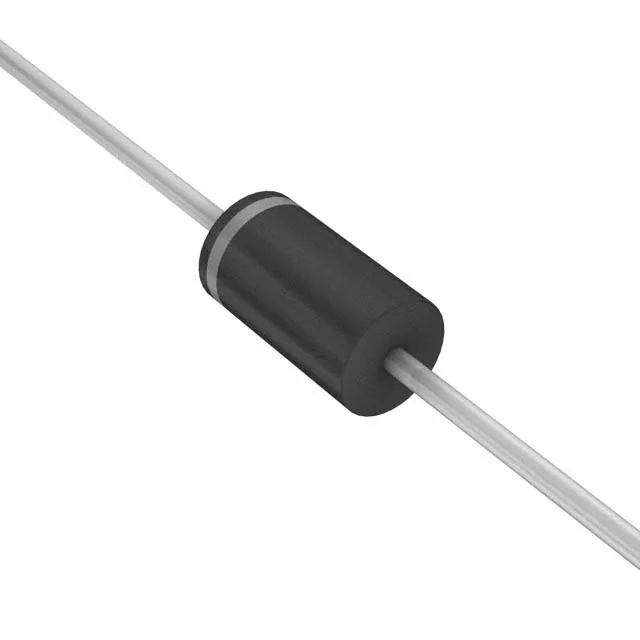
AEC-Q101 is the discrete semiconductor stress qualification standard — it applies temperature cycling, HTRB (high-temperature reverse bias), ESD (per AEC-Q101 human-body model), and humidity bias testing that a generic industrial TVS does not carry. The 1.5KE supplier device package designation maps to the DO-201AA (DO-27) axial body — the through-hole form factor allows higher surge-current handling than equivalently rated SMB or SMC surface-mount packages because the lead inductance is lower and the thermal path to the PCB pad is direct. For automotive load-dump and jump-start transients on the battery feed, the through-hole leadframe is the preferred form factor in engine-control and body-control modules.
Sourcing posture — where this part stands today
The DO-201AA through-hole package is the standard automotive TVS form factor; no layout rework is required if you are already running the 1N6279 base number in the same module footprint.