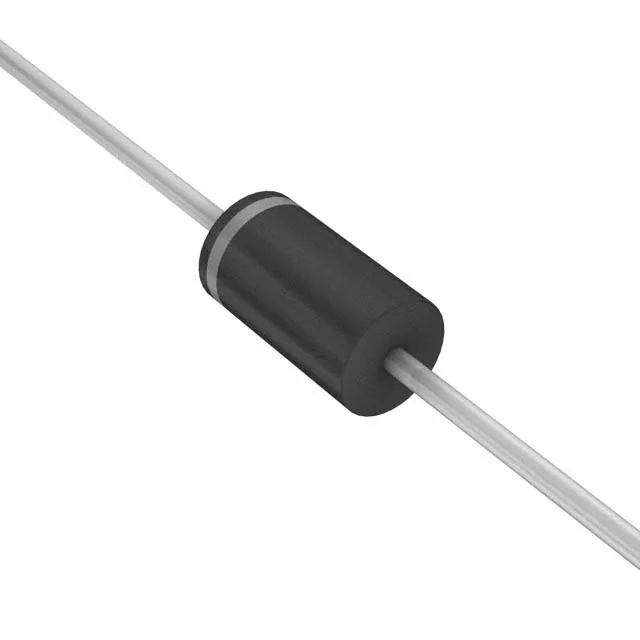
The 1N6278HE3/73 is a unidirectional TransZorb® — Vishay's TVS variant of a Zener diode — qualified to AEC-Q101 for automotive environments. It clamps transient voltage at 29.1 V maximum when conducting a 51.5 A peak pulse (10/1000 µs waveform), while the reverse standoff sits at 16.2 V typical — that 2.3× separation gives the 12 V rail enough headroom to pass normal operation while clamping inductive load dumps and load-switching transients. Peak pulse power is rated at 1500 W (1.5 kW) — this is the clamped energy the device safely dissipates during the transient event, not a continuous rating. The Tj max of 175 °C junction temperature gives substantial thermal margin for engine-bay and under-hood deployments where ambient can run high.
Lifecycle and sourcing reality — the part is officially obsolete
No L* successor, no parametric cross-reference, and no documented replacement in this series — a board spin may be required to migrate to a newer TVS family if remaining stocks run out. The part ships tape-and-box (TB) in the DO-201AA (DO-27) axial through-hole package — the same industry-standard outline as the 1.5KE series supplier device package designation, which is how Vishay references this form factor. Through-hole mounting ties it to a legacy PCB footprint — confirm the hole pattern before specifying a replacement.
Deployment context — where this class of part protects automotive circuits
AEC-Q101 qualification means the die and package passed temperature cycling, mechanical shock, and humidity-biased life tests specific to automotive grade. The -55 to 175 °C junction temperature window covers cold-start to full-load thermal extremes in an engine-compartment environment. The TransZorb® function is unclamped inductive energy absorption — protecting downstream ECUs and sensors on 12 V supply rails from voltage spikes that exceed the semiconductor breakdown threshold.