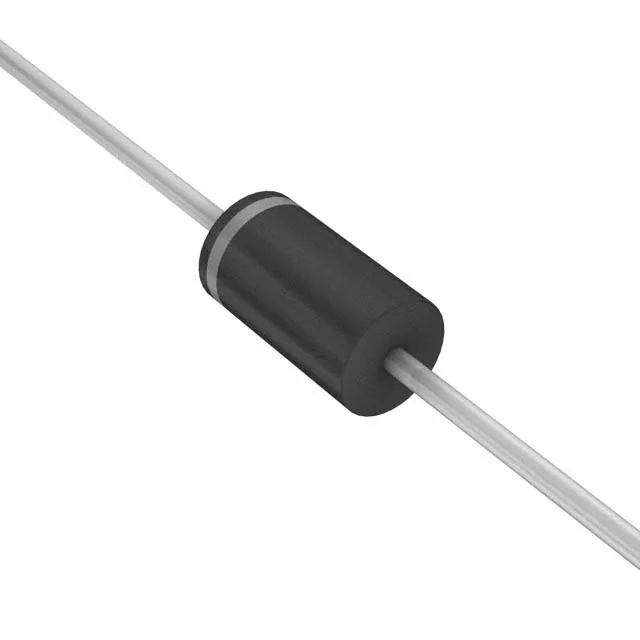
The 1N6278HE3/54: The 1500W peak pulse rating (1.5kW) is a transient event spec — a single 10/1000 µs surge current pulse drives 51.5A through the device at the clamping voltage of 29.1V, absorbing the energy that would otherwise reach the load. What matters for board-level protection is the voltage window between the 16.2V reverse standoff and the 29.1V clamping ceiling: the protected rail sees no more than 29.1V during a fault event, so downstream semiconductors must survive that spike for the pulse duration.
Automotive thermal grade and the TJ rating
Rated junction temperature runs to 175°C — this is the upper bound under the transient pulse, not a continuous thermal limit. For a 12V automotive rail, the 16.2V standoff gives comfortable headroom above the nominal battery voltage, but the margin shrinks in cold-crank and load-dump scenarios.
Automotive grade and compliance
AEC-Q101 qualification places this in the automotive discrete semiconductor stress-grade tier — the qualification covers temperature cycling, humidity bias, and surge current testing to the discrete device standard. The TransZorb® designation is Vishay's trademark for their bi-directional TVS construction built on a Zener junction. The DO-201AA (DO-27) axial package is the standard through-hole footprint for this power class — it mounts in a board hole and is wave-soldered, which means thermal relief to the PCB plane matters for repeat pulse endurance.