What the clamping voltages mean for the protected node
The 1N6278AHE3_B/C: The 27.7 V clamping ceiling is the number that protects the downstream semiconductor — the downstream device sees no more than that voltage during a surge event, so its absolute-maximum rating must sit above 27.7 V with margin to spare.
Peak pulse power and thermal headroom
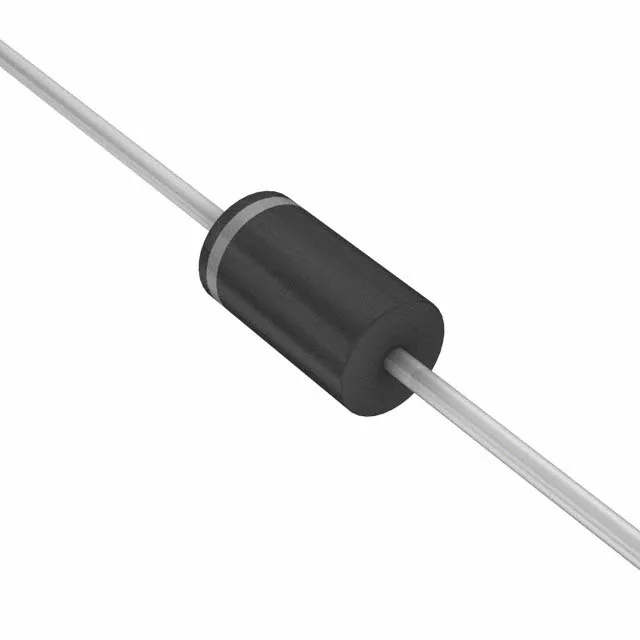
The -55°C to 175°C junction temperature range gives substantial thermal headroom for automotive engine-bay and telecom outdoor enclosures that see wide ambient swings; the DO-201AA axial lead package conducts heat into the PCB copper and the lead frame, so the layout pad area directly governs the thermal resistance the diode achieves in the end equipment.
Automotive qualification — what AEC-Q101 means here
AEC-Q101 qualification means the diode passed the automotive stress-discrete test sequence — humidity, temperature cycling, bias life, and surge repetition — at the grade level corresponding to its temperature rating. This is the baseline qualification needed for any automotive ECU input-protection or telecom infrastructure board that must demonstrate automotive-grade Bill of Materials compliance to IATF 16949.
Telecom line protection application context
Listed for telecom applications — on a 48 V or 24 V telecom bus the diode's 17.1 V standoff sits well below the working rail, so the line operates with no clamp interference. A lightning surge or switching transient on the outdoor cable pair raises the line voltage above standoff; the diode clamps at 27.7 V before the active devices downstream see overstress. Telecom protection standards (GR-1089, ITU-T K-series) specify the 10/700 µs and 8/20 µs waveforms; the 1.5 kW / 54.2 A ratings at 10/1000 µs give a conservative match — verify the test waveform in the datasheet application section before committing to a specific surge compliance test.