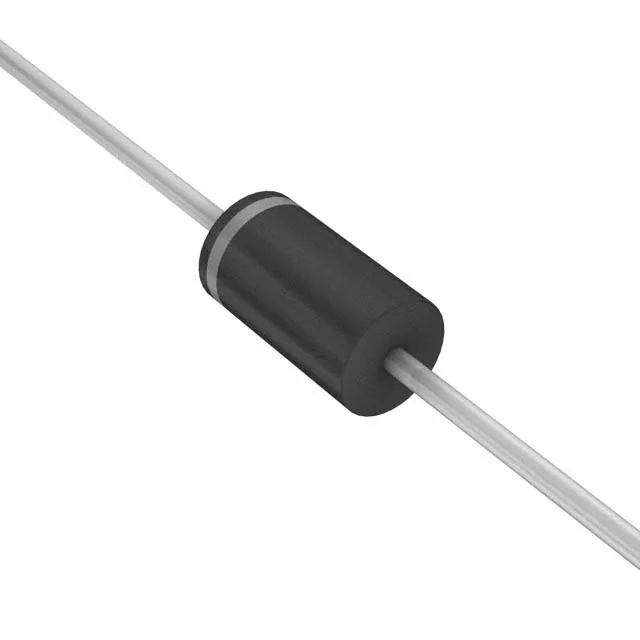
What the 1.5KE clamping spec means for automotive protection
The 1N6278AHE3_A/D clamps at 27.7 V maximum under a 54.2 A 10/1000 µs surge, which means it absorbs a 1.5 kW transient and folds the spike down to a level the downstream semiconductor can survive — the unidirectional 1-channel stack is the working element for a single rail. The 19 V minimum breakdown sets the guard band above the nominal rail; the 17.1 V standoff is the off-state working voltage the protected line sees during normal operation. At 175 °C maximum junction temperature, the thermal margin to Tj-max is the selection driver for engine-bay 24 V loads that see load-dump transients per ISO 7637-2.
AEC-Q101 qualification and automotive deployment context
The AEC-Q101 grade confirms the diode has passed the automotive qualification stress sequence — temperature cycling, humidity bias, and surge life — making it acceptable for under-hood and chassis-domain protection without a custom qualification program. This is not a commercial-temperature commercial-grade part; the -55 to 175 °C Tj range and the automotive TransZorb® series designation set the grade floor for ECU input protection, reverse-battery clamps, and inductive kick suppression in the drivetrain domain. The DO-201AA axial body mounts through-hole on a PCB — the lead bend radius at the package shoulder is the practical limit on mechanical stress during board flex.