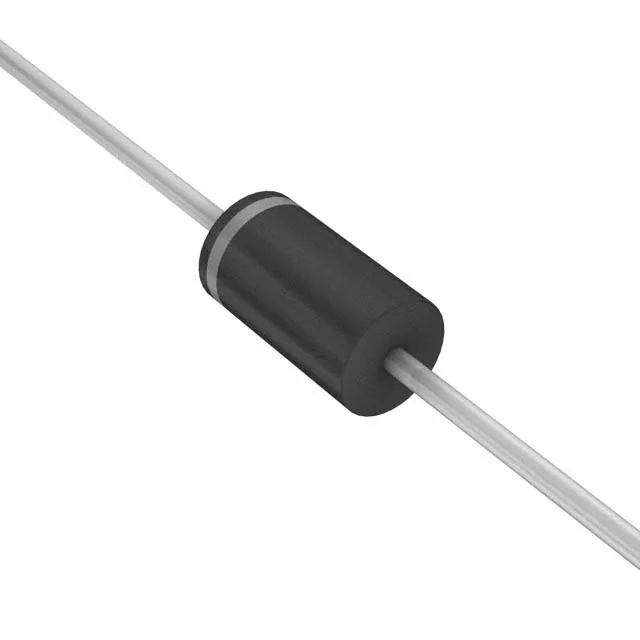
1500W peak pulse — what that means in the harness
The 1N6278AHE3_A/C: A 1500W peak pulse rating at 10/1000 µs defines the TVS role in the automotive 12 V and 24 V harness — it must clamp load-dump and inductive transients fast enough that the downstream ECU or module never sees more than its transient withstand ceiling. The 27.7V maximum clamping voltage at 54.2A peak pulse current tells you what the protected circuit actually sees; the part must absorb that energy without going into thermal runaway. The reverse standoff typ of 17.1V sets the bias on the part during normal operation — it sits off, invisible to the circuit, until a transient pushes it above breakdown.
The standoff window — 17.1V to 19V minimum breakdown
The minimum breakdown of 19V gives 1.9V of margin above the 17.1V standoff typ — enough that normal 12V supply variations and cold-crank dips do not trigger conduction. The part conducts only when a genuine transient exceeds the breakdown threshold.
AEC-Q101 — the qualification that matters for automotive
The AEC-Q101 qualifier is the differentiator from industrial or commercial TVS diodes. It means the part has passed the automotive stress sequence — humidity, temperature cycling, surge life — and is traceable to PPAP documentation. For under-hood or body-control modules that face engine-bay thermal profiles, the -55°C to 175°C junction temperature range gives headroom through cold start and hot soak without derating to zero.