What the clamping specs mean on the bench
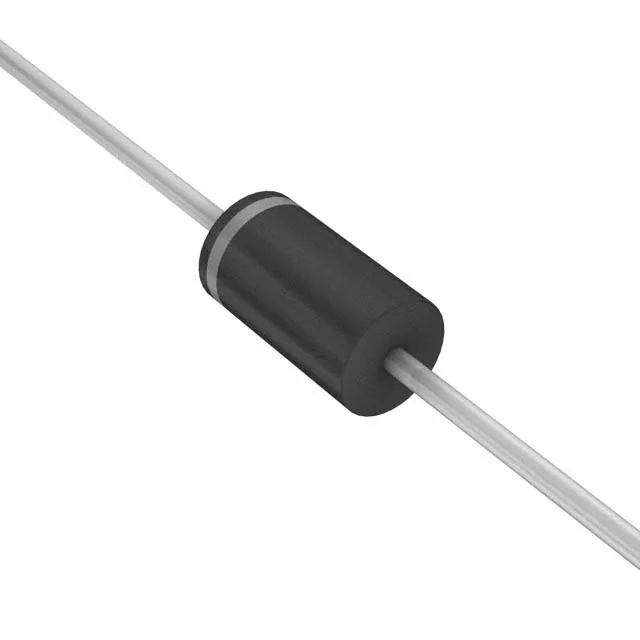
The 1N6278A-E3/51: Rated 1500 W peak pulse (10/1000 µs) with a 17.1 V reverse standoff — that is the working rail the TVS watches without turning on. On a 24 V supply line that is the margin you are protecting: the TVS clamps the transient well below what the downstream semiconductors can take. The 175°C maximum junction temperature gives the part headroom in high-ambient or enclosed-panel environments — important if you are tracing a rail that failed because the original TVS was undersized for the surge environment. The scorch mark on a failed TVS of this class usually tells you whether it saw a single large event or repeated smaller hits that cooked the junction.
DO-201AA through-hole — what this package means for rework
Axial-leaded DO-201AA, through-hole mount — the two leads are spaced wide enough that you can get a hot-air pencil or solder iron under the body without reflowing adjacent parts on the same rail. Bake before rework if the board has been in a humid environment; the glass-passivated junction in a TransZorb is moisture-sensitive at the reflow stage, not at the rework stage, but the board laminate matters. Tin-plated leads accept standard solder (Sn63/Pb37 or SAC305) without special profile care.