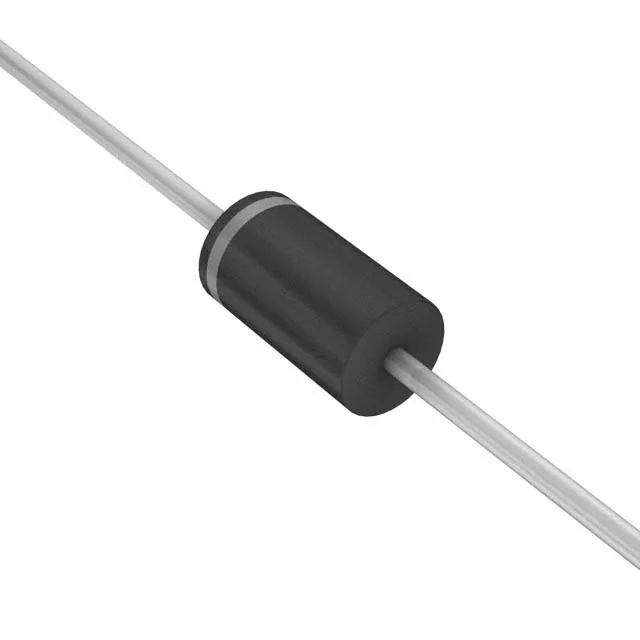
The 1N6277-E3/54: The 1.5 kW peak pulse rating specifies what the device survives during a single 10/1000 µs transient event — the shape of that waveform is the key qualifier. A 1 kW lightning-surge candidate that sees a 10/1000 µs strike dissipates 15 J in that window, and the clamping voltage at the peak current of 56.6 A sits at 26.5 V. That 26.5 V clamping ceiling is what your downstream circuitry must be rated to withstand. 16.2 V minimum breakdown at the low end and the 14.5 V typical reverse standoff define the protection window — the part is off until the transient pushes the line above 14.5 V, then it snaps into conduction and clamps at 26.5 V. For a 15 V rail, the 14.5 V standoff gives only 0.5 V margin in normal operation, so this part is not protecting against a regulated 15 V supply — it is there for bus lines that sit near ground in idle and see inductive or lightning transients above that standoff level.
Obsolete — sourcing reality for a TransZorb
The 1.5KE series covers the same DO-201AA footprint across a range of standoff voltages — the 1.5KE16A at 16 V standoff is the nearest candidate by voltage, but the exact standoff and clamping specs need cross-checking against your board's transient requirement before committing to a substitute.