What the surge ratings mean for your protection circuit
The 1N6276AHE3_A/C: This is an automotive-grade unidirectional TVS Zener — Vishay calls it a TransZorb® — qualified to AEC-Q101 for under-hood and chassis-domain deployment. The reverse standoff of 13.6 V defines the normal operating rail the protected circuit runs on; the 15.2 V minimum breakdown is where the device begins conducting. Once clamped, the 22.5 V ceiling limits what the downstream load sees — so the downstream IC or module must tolerate a brief 22.5 V spike, not a 13.6 V rail.
Automotive thermal grade and qualification
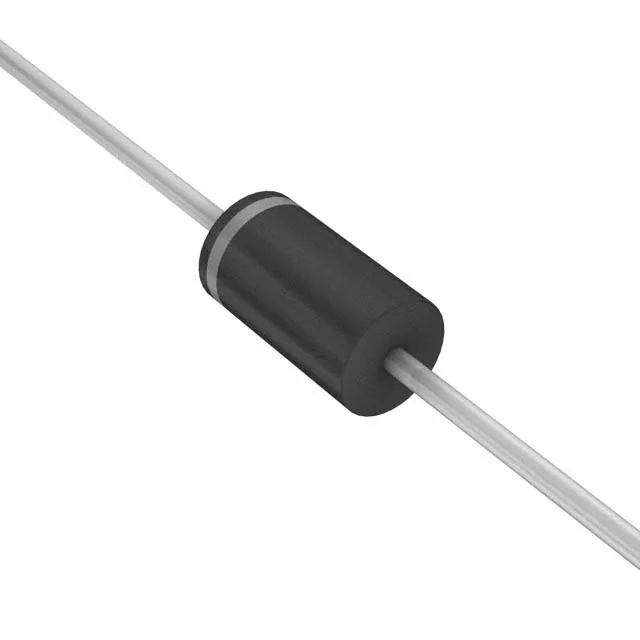
AEC-Q101 qualification means it has passed the automotive stress suite — temperature cycling, humidity, ESD, and surge life — so it carries the pedigree a Tier-1 or OEMS program requires for production. The DO-201AA axial package is a through-hole part — it mounts in a board hole, not a surface pad — which still shows up in legacy automotive modules and in designs where the through-hole lead provides a thermal conduction path the board copper cannot match. The Tape & Reel packaging suits automated insertion on high-volume production lines.
The part carries an Active product status from Vishay General Semiconductor — it is in current automotive production with full qualification support. The 1.5KE supplier device package designation is the Vishay internal footprint code for the DO-201AA body, and the base product number 1N6276 ties this part into the broader 1N6276-series surge suppressors.