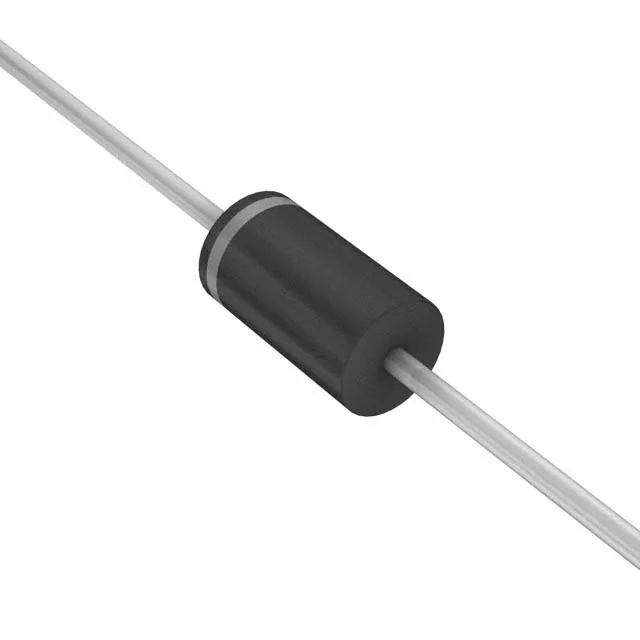
The 1N6275HE3/54 is a unidirectional Zener-based transient voltage suppressor — Vishay calls this the TransZorb construction, which diffuses the surge energy inside the die rather than relying on a junction avalanche alone.
Automotive grade — the AEC-Q101 qualification and temp range
The AEC-Q101 qualifier means it has passed the automotive stress grades for discrete semiconductors: humidity, temperature cycling, and surge current life. The -55 °C to 175 °C junction temperature range is the thermal headroom that makes it viable in engine-bay and direct-chassis locations where ambient routinely hits 125 °C — the die still has margin at that temperature before the clamping voltage drifts.
DO-201AA through-hole — board integration context
Axial DO-201AA package, through-hole mount — the lead diameter and body length dominate the thermal path to the PCB copper. On a typical ceramic or FR4 board with a decent landing pad, the RthJA lands around 40–50 °C/W, which is why the 175 °C junction limit and the 1500 W surge rating need to be evaluated together under actual mounting conditions, not just the datasheet nominal.