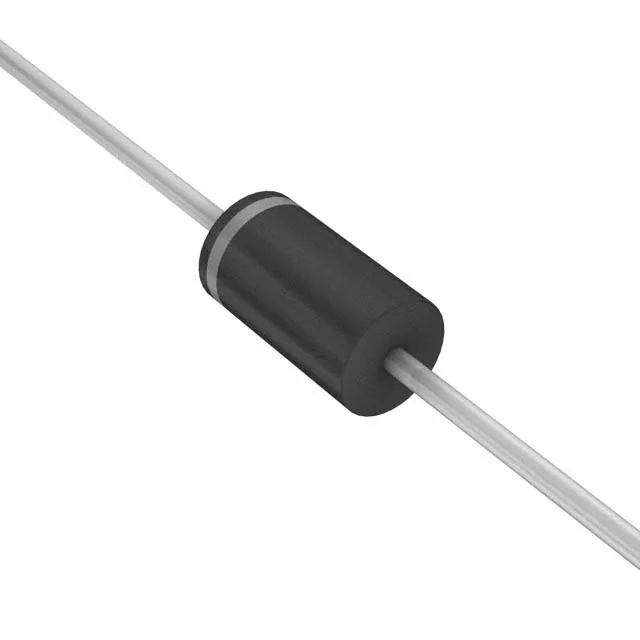
Peak pulse rating and clamping performance
The 1N6275AHE3_A/C: At that pulse width the clamping voltage holds at 21.2V maximum while the diode conducts 70.8A peak — the downstream silicon sees a hard clamp before its abs-max is breached. The 14.3V minimum breakdown keeps the device off during normal 12V rail operation where the typical standoff sits at 12.8V. A unidirectional TVS like this handles one polarity only; reverse-polarity transients on the same net require a second device. Because the part is classified as a Zener type, some BOM systems misfile it — TransZorb® is Vishay's TVS architecture, not a standard Zener regulator, and the peak pulse capability is what separates the two families.
Automotive qualification and thermal margin
The -55°C to 175°C junction temperature rating gives wide thermal headroom — an under-hood ECU in a 125°C ambient still has 50°C of junction margin above the board.
Automotive circuit protection role
Automotive is the stated application; load-dump, reverse-battery, and jump-start transients are the threat vectors this class of TVS is designed to absorb. Because the part is unidirectional with a 12.8V standoff on a 12V nominal rail, it sits idle during normal operation and fires only when a transient exceeds the breakdown threshold — the downstream automotive ECU BCM or sensor rail sees clamping action before the abs-max rating of any downstream IC is challenged.