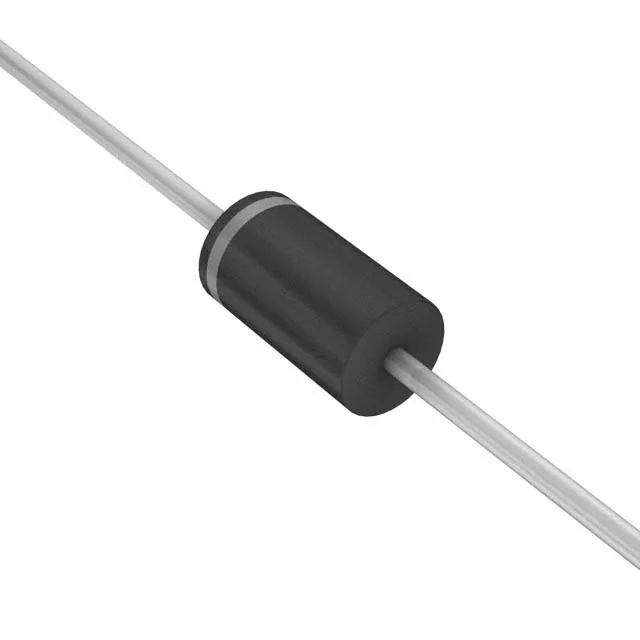
1.5KE TVS diode — what the voltage ratings mean
The 1N6273AHE3/51: The three voltage specs are the selection story: 10.2V typical reverse standoff is the DC working voltage the diode sees in normal operation; 11.4V minimum breakdown is where it starts conducting; and 16.7V maximum clamping voltage at 89.8A peak pulse current is what the downstream circuitry is guaranteed to survive when the transient fires. A designer sizing the clamping network uses the standoff to set the protection threshold and the peak pulse current to confirm the diode survives the worst-case load dump current. The 89.8A peak pulse rating at 10/1000µs is the IEC 61000-4-5 surge class — it tells you the diode handles the automotive load-dump pulse without degrading. Above that current the clamping voltage rises, so for higher-energy transients a larger 1.5KE rating or a parallel diode arrangement is needed.
Automotive grade and thermal envelope
AEC-Q101 qualification is the automotive stress-screen grade — it means the part passed temperature cycling, humidity bias, and surge life testing per the AEC-Q101 test sequence. For an under-hood ECU input-protection rail, this diode sits in the same thermal zone as the MOSFETs it protects. The base product number is 1N6273, and the /51 suffix is the Vishay automotive screening grade (similar to the MIL-PRF-19500 JAN designation system).
DO-201AA through-hole footprint and board integration
The axial DO-201AA package mounts in holes on a PCB — the leads are the primary thermal path to the board pad and the chassis heatsink if used. For automotive boards, the through-hole form factor is common on legacy ECU designs where the board flexes under vibration and a surface-mount part risks pad lift. Newer automotive designs have migrated to SMC/DO-214AB packages for the same 1.5KE power class, but the DO-201AA is still found in mature platforms and in-service repair stock.