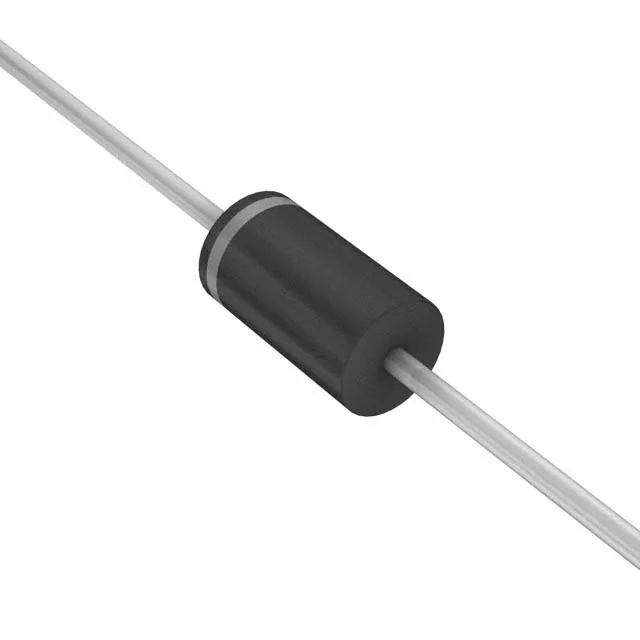
The 1N6272A-E3/51: The 1500 W peak pulse rating (10/1000 µs waveform) defines the surge energy the part can absorb without degradation — this is the primary selection axis for any transient suppression slot on a power bus. At that surge level the device clamps at 15.6 V maximum, well below the 10.5 V minimum breakdown threshold on the protected side of the standoff window.
Wide junction temperature opens demanding environments
Rated junction temperature runs from -55°C to 175°C, meaning the part lives in equipment that sees wide ambient swings — industrial enclosures, outdoor cabinets, or anything with poor thermal management. The axial DO-201AA package relies on the PCB copper and free convection for thermal relief; the lead length and pad stack-up directly set the thermal resistance from junction to ambient. At the 175°C upper limit the diode is consuming whatever surge energy the board has already partially attenuated through source impedance.
Last Buy — what that means for the sourcing desk
This part carries a Last Buy lifecycle designation — once remaining stock is exhausted there is no factory-traceable path. The ledger carries no official successor order code, so any cross-reference to a replacement part must come from the engineering team confirming a pin-compatible alternative with matching standoff, clamping, and peak pulse ratings. The procurement action is unambiguous: quote the full BOM quantity against this exact order code now, before the independent-channel surplus that follows a Last Buy is gone. No authorised distributor will be holding fresh production stock on this number.