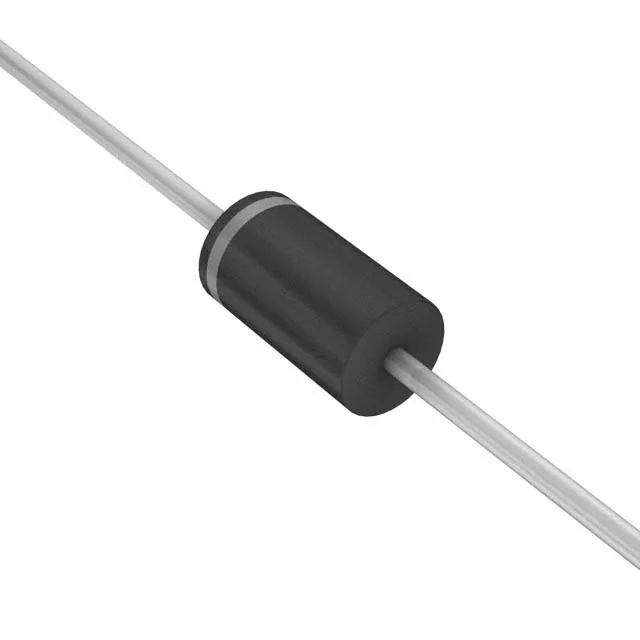
Peak Pulse Power and What the 1500 W Rating Means
The 1N6270A-E3/73: The corresponding peak pulse current is 112 A at that same waveform. In practice the 10/1000 µs shape (slow, high-energy surge — lightning or inductive kickback) is the design basis for industrial and instrumentation protection; the diode's clamping voltage at 112 A is what the downstream circuit sees during the event. The clamping voltage ceiling of 13.4 V max at peak pulse current means that when the transient arrives, the protected node is held below 13.4 V, giving sensitive circuitry the let-go margin it needs. The reverse standoff of 7.78 V typ means the diode is fully off during normal operation — only when the voltage exceeds the 8.65 V minimum breakdown does it activate. This is not a power-line protector (confirms this); it is for signal lines, control rails, and secondary protection behind a bulk clamp.
Junction Temperature Range and Protection Application
The -55°C to 175°C junction temperature rating is wider than most consumer-grade TVS diodes — this range reflects the TransZorb® die attach and lead-frame construction that handles the thermal cycling of clamping events without cracking the passivation. For a general-purpose device protecting industrial equipment, motor-drive control panels, or instrumentation, that thermal headroom means the diode tolerates a hot ambient without derating as quickly as a commercial-grade part. The unidirectional polarity means it clamps one polarity only — for AC or bidirectional protection a matching complementary part is required; a single 1N6270A-/73 on a DC rail is the correct topology.