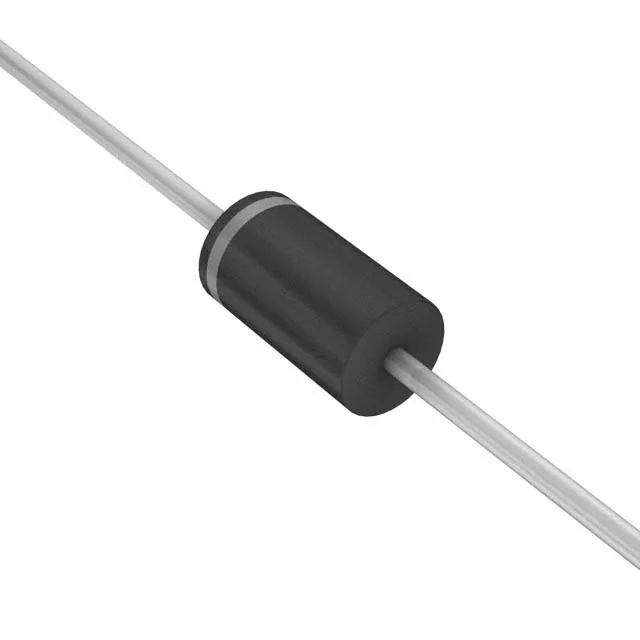
Vishay General Semiconductor - Diodes Division 1N6269AHE3_A/C — Circuit Protection

Vishay 1N6269AHE3_A/C TVS Diode, 124A 1.5kW

MPN1N6269AHE3_A/C
Active

Vishay General Semiconductor - Diodes Division Automotive AEC-Q101 TransZorb® Zener, 1.5kW peak pulse, 124A peak pulse, 7.02V standoff, 12.1V clamping, DO-27 axial through-hole, Tape & Reel.

Independent supplier — new & surplus stockAuthenticity-screened · ESD-safe packingListing updated Aug 2026

Specifications

1N6269AHE3_A/C specifications
ParameterValue
TypeZener
SeriesAutomotive, AEC-Q101, TransZorb®
MountingThrough Hole
Voltage - breakdown7.79V
Voltage - clamping (Max) @ ipp12.1V
Voltage - reverse standoff7.02V
Current - peak pulse (10/1000μs)124A
Power - peak pulse1500W (1.5kW)
Power line protectionNo
Operating temperature-55°C~175°C(TJ)
PackageTape & Reel (TR)
ApplicationsAutomotive
CaseDO-201AA, DO-27, Axial
Unidirectional channels1

Product details

1.5 kW surge rating and the automotive TVS class

The 1N6269AHE3_A/C: This sits in the 1.5KE family footprint — a common automotive protection standard — with the AEC-Q101 qualification that means it passed temperature cycling, humidity, and surge life testing to the automotive stress grade.

The protection window — standoff, breakdown, clamp

Three numbers define the protection window: 7.02 V reverse standoff (typ), 7.79 V minimum breakdown, and 12.1 V maximum clamping voltage at peak pulse current. The standoff is the working rail the diode ignores; above 7.79 V it begins conducting and clamps the spike at 12.1 V, shunting the surge current away from the protected IC. In a 12 V automotive rail the normal operating voltage sits below 7.02 V, so the diode stays off during engine-running conditions and activates only on a transient event.

Automotive grade and thermal range

The AEC-Q101 qualification puts this in the automotive discrete class — it is designed for the under-hood temperature band. The -55 °C to 175 °C junction temperature range is well beyond what a commercial TVS sees; it covers cold-cranking ambient at the low end and sustained thermal soak at the high end. For a design targeting automotive ECU input protection or battery-line clamping, this thermal headroom matters more than the headline wattage number — a TVS that clips early under temperature is worse than one with a higher clamping voltage.

Frequently asked questions

What family does 1N6269AHE3_A/C belong to and is it pin-compatible with other TVS diodes?

It is a unidirectional 1.5KE-family TVS in a DO-27 axial package.

Is the 1N6269AHE3_A/C automotive-qualified beyond AEC-Q101?

The listing confirms AEC-Q101 qualification and automotive application. Whether additional compliance documentation (such as IMDS, REACH, or OEM-specific forms) is available depends on the specific automotive platform — confirm requirements with the sourcing team at RFQ.