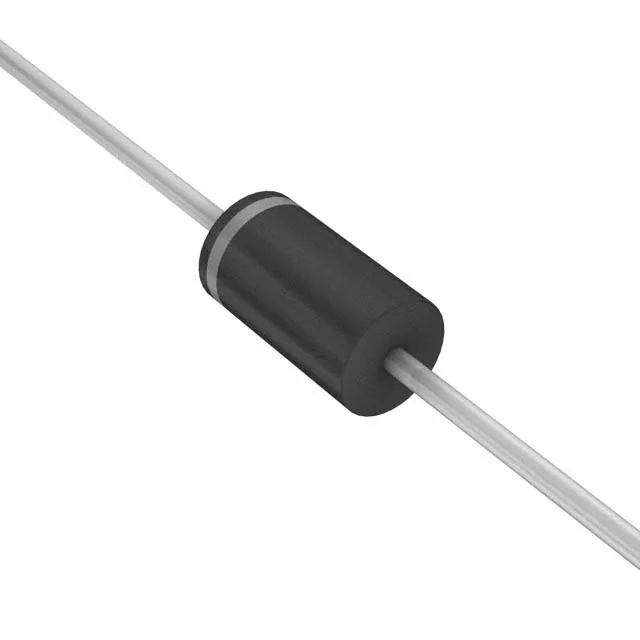
The type says Zener — the specs say TVS
The 1N6267AHE3/51: The field labelled "Type: Zener" trips up a lot of BOM pullers, but the parametric footprint is unmistakably a unidirectional TVS diode. TransZorb® is Vishay's own TVS brand — this part suppresses transients, it does not regulate. The reverse standoff sits at 5.8V typ, the minimum breakdown threshold is 6.45V, and the clamping ceiling at peak pulse current is 10.5V. That is a defined protection window, not a Zener regulation band.
What the voltage window means for the protection design
The 5.8V standoff rating sets the normal working voltage — the protected node sits below this in ordinary operation. The 6.45V minimum breakdown is where the device first responds; below it the part stays off and leaks minimally. The 10.5V clamping ceiling is the voltage the node sees when the full 143A peak pulse is flowing — that figure defines the let-through voltage the downstream circuitry must withstand. Designing to that clamping ceiling, not the standoff, is what makes the circuit survivable. The 1.5 kW peak pulse figure is the same event expressed in power terms. In an automotive load-dump or jump-start transient, the diode conducts for the pulse width and then returns to its high-impedance state; thermal recovery between events depends on the board layout and ambient.
Where it lives and why the automotive grade matters
The AEC-Q101 qualification means this part was qualified to the automotive stress grades — if you are replacing it in an existing automotive BOM, the replacement must carry the same grade to maintain the design validation, not just match the electrical parameters.
Sourcing — the part is obsolete, no successor on record
Vishay lists the product status as obsolete. The DO-201AA axial family still has active members in the same voltage band, but a different base part number means a different datasheet — confirm the standoff, breakdown, and clamping specs against your protection design before committing to a substitute. Independent-channel sourcing is the available path; quantities and lot traceability are confirmed at RFQ.