Standoff vs clamping — the TVS selection axis
The 1.5SMC91CAHM3/I: 77.8 V reverse standoff is the voltage the line sits below in normal operation without conduction; 125 V clamping is the maximum the protected load sees when the 12 A peak pulse fires — together these two figures define the protection window the designer sizes the TVS into. Breakdown minimum of 86.5 V sits inside the standoff, confirming the device does not begin conduction until the transient exceeds the nominal clamp threshold. The bidirectional configuration means it handles AC rails or dual-polarity transients without orientation — for a single-polarity DC rail the unidirectional variant in the same SMC package is the common alternative, but the bidirectional is the correct choice when the protected node swings both above and below ground.
Automotive qualification and deployment envelope
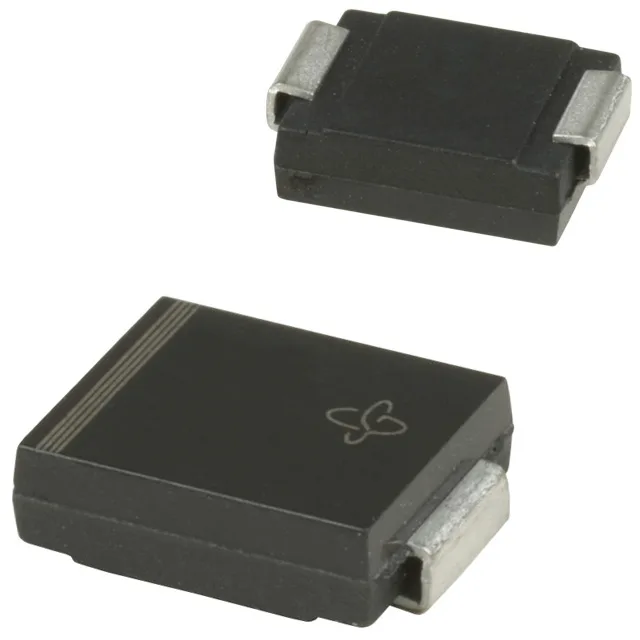
Primary deployment targets are automotive ECU input protection and telecom line-card transient suppression, per the listed applications. The DO-214AB (SMC) package is the standard surface-mount footprint for this power class; the tape-and-reel packaging supports high-volume pick-and-place assembly lines without reel-conversion steps.