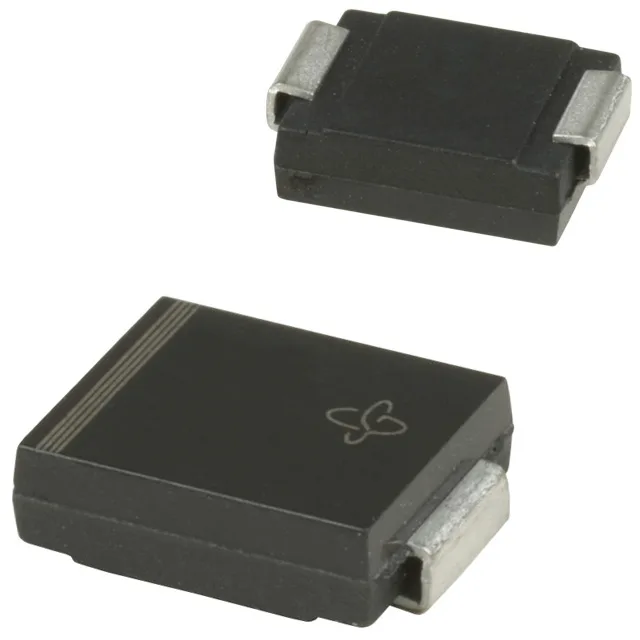
125V clamping at 12A peak — what the protection chain means
The 1.5SMC91A-M3/57T clamps a 12 A peak pulse (10/1000 µs waveform) to 125 V maximum, while the reverse standoff sits at 77.8 V typical — the margin between standoff and clamping is the absorbed transient headroom. A strike at or above 86.5 V minimum breakdown initiates conduction, routing the surge current away from the protected load. 1500 W peak pulse rating in the 10/1000 µs regime is the standard TVS surge-withstand figure — it defines what the part survives without degradation. The DO-214AB (SMC) package handles the thermal path from junction to board copper; adequate landing-pad area under the cathode tab is the layout constraint.
TransZorb® vs a standard Zener — the protection framing
Listed as Type Zener, but Vishay's TransZorb® branding places this in the TVS suppressor class — optimised for transient clamping rather than DC regulation. The unclamped inductive-spike behaviour and the peak-pulse power rating are the distinguishing specs; a standard Zener datasheet would not carry a 10/1000 µs surge waveform rating. Unidirectional, single-channel — it clamps one polarity only. For AC lines or dual-polarity rails a bidirectional TVS would be required; this part is the single-polarity building block.
Thermal envelope and production status
Junction temperature range is -65°C to 150°C (TJ), giving the part headroom for high-ambient or poorly ventilated enclosures. The 150°C ceiling is the absolute limit — the clamping event itself generates junction heat per the energy rating, so repetitive transients above the single-pulse rating require derating.