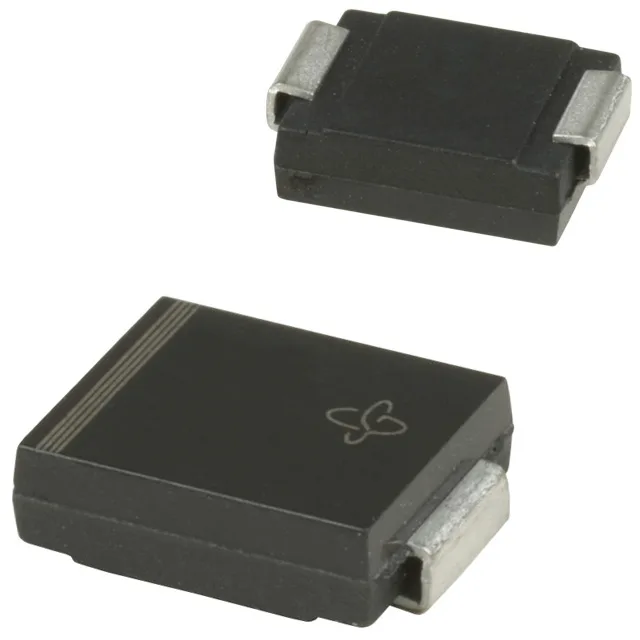
The 1.5SMC91A-E3/57T: The 1.5SMC91A-/57T clamps at 125V maximum with a 12A peak pulse current flowing — the clamping voltage is the voltage the TVS diode enforces across the line when a transient strikes, and 125V is what the downstream circuitry must survive.
How the standoff and breakdown voltages define the protection window
The reverse standoff voltage is 77.8V typical — this is the working rail the TVS observes without conducting during normal operation, so it is safe for a 77V nominal rail. The breakdown minimum of 86.5V is where the TVS first begins to avalanche and clamp. Between 77.8V and 86.5V the diode sits off and draws only leakage current; a spike that pushes past 86.5V brings the clamping stack into action and forces the voltage down to 125V.
Temperature range and where this part lives
The junction temperature range runs from -65°C to 150°C — this covers the full automotive temperature band and most industrial enclosures without derating. Actual Tj at the rated 12A peak pulse depends on board layout and the exposed pad thermal connection; the datasheet derating curve governs the real-world ceiling. The DO-214AB SMC package is the industry-standard footprint for this power class, and surface-mount termination suits automated assembly. Classified for general-purpose applications, the part is not restricted to a single end market — it appears across power supply input protection, industrial control rails, and communications infrastructure where the 77.8V standoff voltage matches the nominal operating rail.
Active production — what the lifecycle status means for your BOM
The base product number 1.5SMC91 maps to the wider 1.5SMC family, which shares the same footprint and pinout across multiple voltage grades; a board-level replacement within the series follows the same land pattern.